Some nights, health questions feel heavier than they should. Not dramatic, not urgent just persistent. The kind that sit quietly in the back of your mind while you scroll, while you wait, while you imagine worst-case scenarios you don’t admit out loud. Surgery does that to people. Even the word has weight.
And then you hear about laparoscopic surgery. Smaller cuts. Faster recovery. Less pain, they say. It sounds almost too neat. Almost suspicious. Which is why people eventually land on the same question, whispered more than asked: Is it actually safe? And is it really worth it?
Understanding the laparoscopic surgery pros and cons is essential for patients who want to know whether minimally invasive surgery is safe, effective, and suitable for their condition.
This isn’t a brochure. It’s more like thinking out loud. Letting the facts sit next to the feelings. Because surgery is never just physical. It lives in the mind long before it reaches the body.
The laparoscopic surgery pros and cons help patients evaluate the benefits, risks, and recovery expectations before making a surgical decision.
What is Laparoscopic Surgery and Why Understanding Laparoscopic Surgery Pros and Cons Matters
Laparoscopic surgery is often introduced as “minimally invasive,” but that phrase can feel abstract until you picture it. Understanding laparoscopic surgery pros and cons helps patients make informed medical decisions.
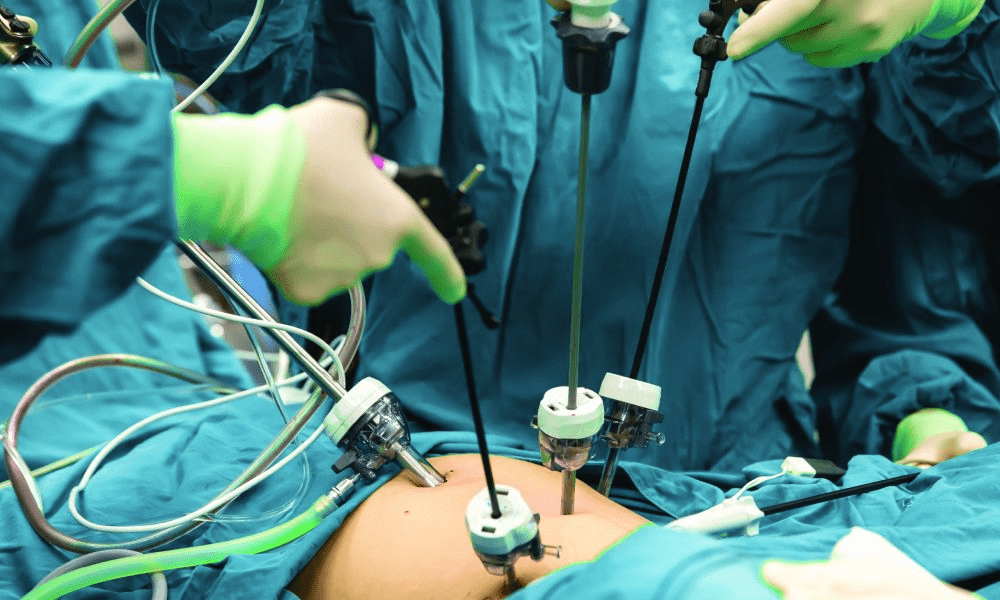
Instead of one large incision, surgeons make a few small ones. Through these, a camera and fine instruments enter the body. The camera projects everything onto a screen enlarged, illuminated, precise. The surgeon operates while watching a live internal landscape unfold in front of them.
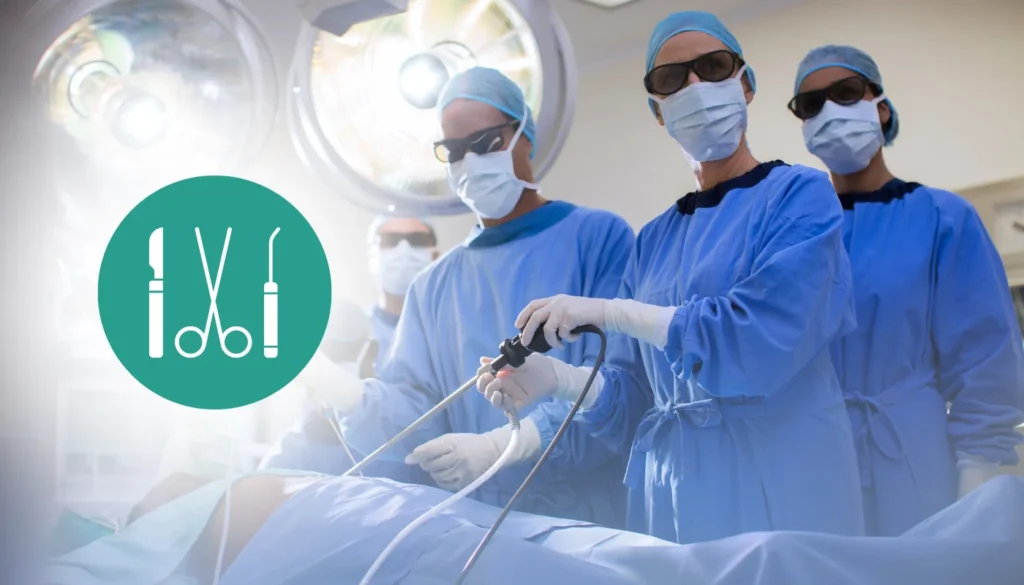
It’s used for gallbladder removal, appendectomy, hernia repair, gynecological procedures, bariatric surgeries, and many others. Not experimental. Not rare. Just… modern.
What makes it different isn’t only the technique. It’s the philosophy behind it. Do what’s necessary. Disturb as little as possible. Trust the body to heal faster when it hasn’t been pushed too hard.
But philosophy doesn’t cancel reality. Every method has trade-offs. Which is why the conversation around Laparoscopic Surgery Pros and Cons matters more than blind optimism.
Laparoscopic Surgery Pros and Cons: Is Laparoscopic Surgery Safe
- Widely practiced with established safety protocols
- Lower infection rates compared to open surgery
- Safety depends on surgeon experience and patient condition
When discussing laparoscopic surgery pros and cons, safety is one of the most important concerns for patients considering minimally invasive procedures.
Statistically, yes laparoscopic surgery is considered safe for a wide range of procedures. In many cases, it is safer than traditional open surgery. Smaller wounds mean fewer infections. Less tissue handling means less trauma.
But safety isn’t a guarantee. It’s a probability shaped by multiple things: the surgeon’s skill, the hospital’s systems, the patient’s health, and the complexity of the condition.
For a young, otherwise healthy patient, laparoscopic surgery often feels straightforward. For someone with prior surgeries, obesity, or chronic illness, it becomes more nuanced. Still possible. Still beneficial. Just more carefully planned.
True safety lives in honest conversations, not assumptions.
Recovery Time in Laparoscopic Surgery Pros and Cons
- Shorter hospital stay
- Faster return to daily activities
- Recovery varies by procedure and individual

Among the laparoscopic surgery pros and cons, faster recovery time is often considered one of the biggest advantages.
When people ask about laparoscopic surgery recovery time, they’re usually asking something deeper: How soon can I feel normal again?
Recovery after laparoscopic surgery is generally quicker. Many patients go home within a day or two. Some even the same day. Walking begins early. Light activity returns sooner than expected.
But recovery isn’t linear. One day feels fine. The next feels heavy. Fatigue sneaks in unexpectedly. Healing isn’t a straight line it’s more like a soft zigzag.
The difference is that the zigzag is shorter. Less dramatic. Less overwhelming.
Pain and Discomfort in Laparoscopic Surgery Pros and Cons
- Mild to moderate pain at incision sites
- Shoulder pain due to gas used during surgery
- Pain usually temporary and manageable
Pain levels are an important factor when evaluating laparoscopic surgery pros and cons.
Pain after laparoscopic surgery surprises people not because it’s severe, but because it’s strange.
There’s incision pain, yes. Usually mild. Controlled with medication. Then there’s shoulder pain, which feels confusing until someone explains it’s caused by residual gas irritating the diaphragm.
Most patients describe the pain as discomfort rather than agony. A soreness. A reminder. Something that fades instead of lingers.
Pain is still pain. But it doesn’t dominate the days the way open surgery pain often does.
Possible Complications in Laparoscopic Surgery Pros and Cons
- Bleeding or infection
- Injury to internal organs
- Need to convert to open surgery
While the advantages are significant, laparoscopic surgery pros and cons must also include potential complications.
No honest discussion avoids the complications of laparoscopic surgery.
They’re rare, but real. Internal bleeding. Accidental injury to organs. Reactions to anesthesia. Sometimes, visibility issues force surgeons to switch to open surgery mid-procedure.
This isn’t failure. It’s judgment. Safety over stubbornness.
Most complications are manageable when detected early. Which is why surgeon experience and hospital preparedness matter more than the technique itself.
Success Rate of Laparoscopic Surgery
- High success rates for common procedures
- Outcomes depend on condition and expertise
- Comparable or better than open surgery
The success rate of laparoscopic surgery is high across many procedures. In some cases, equal to or better than traditional surgery.

Success, though, isn’t just about the operation going well. It’s about recovery. About complications avoided. About quality of life afterward.
Most patients resume normal routines sooner. Scars heal quietly. The surgery becomes a memory rather than a milestone.
That, in its own way, is success.
Side Effects of Laparoscopic Surgery
- Temporary bloating or nausea
- Fatigue during early recovery
- Minor scarring
The side effects of laparoscopic surgery are usually short-lived. Bloating from gas. Nausea from anesthesia. Tiredness that doesn’t match the small incisions.
These side effects often resolve within days. Sometimes weeks. Rarely longer.
They’re reminders that even gentle surgery is still surgery. The body notices. It just recovers with less protest.
Conclusion
The laparoscopic surgery pros and cons show that minimally invasive surgery offers significant benefits while still requiring careful evaluation. It’s a refinement.
It doesn’t eliminate risk. It reduces unnecessary harm. It doesn’t promise painless healing. It offers a kinder path through an unavoidable process.
Is it safe? For most people, yes when done by the right hands, in the right place, for the right reasons.
Is it worth it? Often, yes, especially when recovery, comfort, and long-term wellbeing matter.
And maybe that’s why it feels right to pause, ask questions, and choose consciously. Surgery deserves that much respect.
FAQs
1. Is laparoscopic surgery safer than open surgery?
In many cases, yes. It often has lower infection rates and faster recovery, but safety depends on individual factors.
2. How long does pain last after laparoscopic surgery?
Pain is usually mild and improves within a few days, though some discomfort can last a couple of weeks.
3. Can laparoscopic surgery fail?
Complications are rare, but sometimes conversion to open surgery is necessary for safety.
4. What affects the success rate of laparoscopic surgery?
Surgeon experience, patient health, and the type of procedure all influence outcomes.
5. Are side effects after laparoscopic surgery permanent?
Most side effects are temporary and resolve as the body heals.