
Your doctor says you need hernia surgery, and now there’s a choice to make. Keyhole or open? It’s a fair thing to feel stuck on. Here’s the honest version. When you compare laparoscopic hernia surgery vs open surgery, the keyhole method usually means less pain, smaller scars, and a quicker return to normal life.
Open surgery still has its place, especially for big or complicated hernias. Neither one wins every time. The right pick depends on your hernia, your health, and what your surgeon sees when they examine you. Let’s walk through both so the decision feels clearer.
First, What Is a Hernia?
A hernia is what happens when an organ or some tissue pushes through a weak spot in your muscle wall. Most of the time you’ll notice it as a bulge that comes and goes. The common ones are inguinal hernias in the groin, umbilical hernias near the belly button, and incisional hernias that form at the site of an old surgery.
The important thing to know is that hernias don’t fix themselves. They tend to grow, and the weak spot won’t close on its own. Surgery is the only real solution, which is why the question isn’t usually whether to operate but how. Understanding the differences between laparoscopic hernia surgery vs open surgery helps patients make a more informed decision about treatment.
The Two Ways to Fix a Hernia
Both operations are after the same goal. The surgeon pushes the tissue back where it belongs and strengthens the weak muscle wall, almost always with a mesh that supports the area like a patch. The difference is in how the surgeon gets to the hernia in the first place.
Open Hernia Surgery
Inv open repair, the surgeon makes one larger cut directly over the hernia. They push the tissue back, place the mesh, and close up. This is the older, time-tested approach. Surgeons have done it for decades and know it inside out, which is part of why it’s still trusted.
Laparoscopic Hernia Surgery
In keyhole repair, the surgeon makes a few tiny cuts instead. A thin tube with a camera goes in through one, and small instruments through the others. The surgeon fixes the hernia from the inside while watching a screen. Because there’s no big opening, the surrounding tissue takes far less of a hit.
Laparoscopic Hernia Surgery vs Open Surgery: The Real Differences
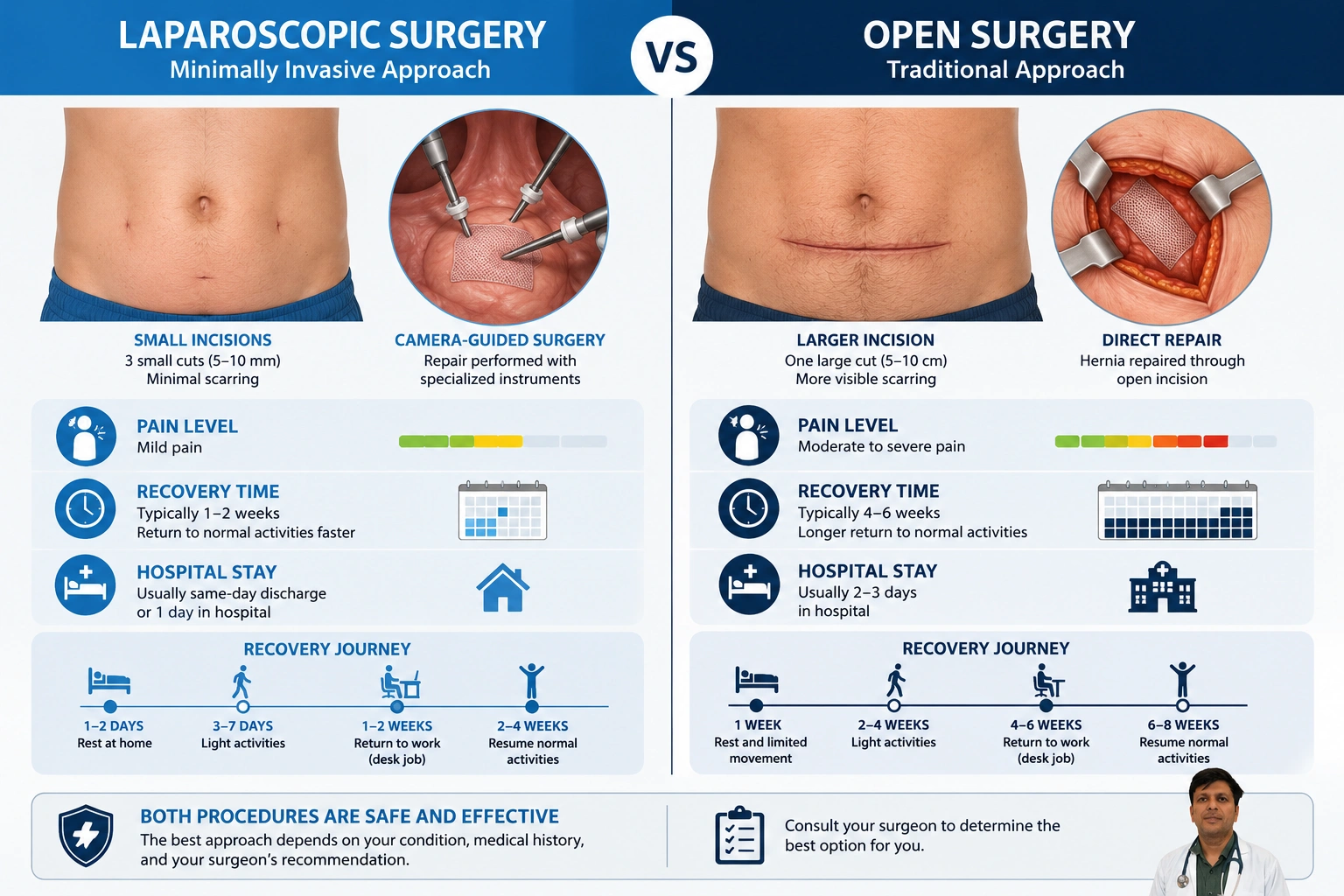
When people line up laparoscopic hernia surgery vs open surgery side by side, here’s how the two stack up on the things patients actually care about.
Start with the cuts. Keyhole surgery leaves a few small marks that fade over time. Open surgery leaves one longer scar. On pain, most keyhole patients report noticeably less of it afterward, simply because there’s less tissue damage to recover from.
Recovery time is where the gap shows most. After keyhole repair, a lot of people are back to normal life in one to three weeks. Open surgery often takes four to six. Hospital stay tends to differ too. Minimally invasive surgery is frequently a day-care procedure, so you go home the same day, while open surgery may keep you in a little longer.
Infection risk rounds it out. Smaller wounds are easier to keep clean, so the chance of a wound infection drops. These advantages are often why patients researching laparoscopic hernia surgery vs open surgery lean toward the minimally invasive option when they’re suitable candidates.
So Which One Is Better for You?
There isn’t a single answer, and anyone who promises you one is overselling it. When weighing laparoscopic hernia surgery vs open surgery, it comes down to your situation.
Keyhole surgery often makes sense if you want a faster recovery and less pain, if you have hernias on both sides, or if you’re keen to get back to an active life or a physical job soon.
Open surgery may be the better call if your hernia is very large or complicated, if you’ve had previous surgery in that exact area, or if your health means you can’t safely have general anaesthesia.
Your surgeon weighs all of this before recommending an approach. The aim is always the same, a repair that’s strong and lasts, with the least disruption to your life.
When to See a Doctor

Don’t wait around if your hernia starts behaving differently. See a doctor if you notice any of these:
- A bulge that’s getting bigger or starting to hurt
- Pain when you lift, bend, or cough
- A lump that suddenly turns hard, red, or very painful
- Nausea, vomiting, or trouble passing stool
That last group especially. A hernia that suddenly becomes very painful can be an emergency, because the tissue inside may be trapped and losing its blood supply. Getting seen quickly prevents a serious problem like a blocked or strangulated bowel.
What About Cost and Anaesthesia?
Cost is usually one of the first practical questions people have when weighing laparoscopic hernia surgery vs open surgery. Keyhole repair can carry a slightly higher price tag because of the specialised cameras and instruments involved. But the picture isn’t that simple.
A shorter hospital stay, fewer days off work, and a lower chance of complications often even things out, so the bigger upfront number doesn’t always mean more spent overall.
Anaesthesia differs too. Laparoscopic surgery is almost always done under general anaesthesia, meaning you’re fully asleep. Open surgery is more flexible. Depending on the hernia and your health, it can sometimes be done under spinal or even local anaesthesia, which is part of why it’s still chosen for patients who can’t safely go under general.
Your anaesthetist and surgeon decide this together, based on what’s safest for you.
How Hernias Are Diagnosed
Most hernias are diagnosed with a simple physical exam. The doctor feels the area and often asks you to cough or stand, since that makes the bulge more obvious. If they need a clearer picture, an ultrasound, CT scan, or MRI can confirm the size and type. That detail helps your surgeon decide which repair suits you best, so the scan isn’t just a formality, it shapes the plan.
What to Expect on the Day
Knowing the day-of routine takes a lot of the nerves out of it. You’ll be asked not to eat or drink for several hours beforehand. Once you’re at the hospital, the team checks you over, and the anaesthetist talks you through what’s happening. The surgery itself is often quicker than people expect, usually somewhere between thirty minutes and a couple of hours depending on the hernia and the method.
After keyhole surgery, many people wake up, rest a while, and head home the same day. After open surgery, you might stay a little longer for monitoring. Either way you’ll feel groggy at first, which is normal, and someone should drive you home and stay with you for the first night.
None of this is dramatic, but having it laid out ahead of time makes the whole thing feel routine rather than scary.
Recovery and Care After Either Surgery
When it comes to recovery, the gap between laparoscopic hernia surgery vs open surgery is real but the basics rhyme. Whichever method you have, start gentle walking within the first few days, because movement helps healing and keeps blood clots away. Eat well, leaning on protein for tissue repair and fibre to keep you regular so you’re not straining.
Skip heavy lifting and hard exercise until your surgeon gives the green light. Keep the wound clean and dry, and don’t skip your follow-up visits.
The main difference is the pace. Keyhole patients usually move through these stages faster and get back to full activity sooner. Open surgery patients follow the same path, just over a slightly longer stretch. Either way, patience pays off. Rushing the heavy stuff is the quickest way to undo good work.
Conclusion
The choice between laparoscopic and open hernia surgery isn’t about one being good and the other bad. When you weigh laparoscopic hernia surgery vs open surgery honestly, keyhole repair gives you smaller scars, less pain, and a faster recovery, which is why it suits so many people.
Open surgery remains the right tool for large, complex, or repeat hernias where the surgeon needs more room to work. Both use mesh, both build a strong repair, and both end with you back to normal life. The smartest move is to get properly examined and let a surgeon match the method to your body rather than picking based on what worked for a friend.
Once you’ve got that advice, the decision usually makes itself.
At Meyash Hospital, our experienced surgeons handle both advanced laparoscopic and open hernia repair. We assess each patient carefully and recommend the technique that fits your body and your life, not a one-size-fits-all approach. With modern operation theatres, skilled teams, and care that keeps you informed, we focus on safe surgery, less pain, and a faster recovery.
This article is reviewed by the expert team at Meyash Hospital. If you are experiencing symptoms, consult the specialists at Meyash Hospital for expert diagnosis and advanced treatment.
Frequently Asked Questions (FAQs)
Q.1 Is laparoscopic hernia surgery vs open surgery more painful?
Generally, laparoscopic surgery causes less pain because the cuts are much smaller and there’s less tissue damage than open repair.
Q.2 Which one has the faster recovery?
Keyhole surgery usually does, often one to three weeks, while open surgery tends to take four to six weeks before full activity.
Q.3 Is laparoscopic repair more expensive?
It can cost a little more because of the advanced equipment, but the shorter hospital stay and quicker return to work often balance things out.
Q.4 Can every hernia be fixed with keyhole surgery?
No. Very large, complex, or recurrent hernias may need open surgery. Your surgeon decides the safest method for your case.
Q.5 Does the mesh work the same in both?
Yes. Both methods use mesh to strengthen the muscle wall and cut down the chance of the hernia coming back.

