
It usually starts small. A dull ache after dinner, brushed off as overeating, and then it happens again a week later, sharper this time, right under the ribs on the right side. That pattern — pain, denial, more pain — is what eventually brings someone here, searching for gallbladder stone treatment at an hour when Google feels like the only doctor available.
Here’s the honest starting point: many gallstones cause no symptoms at all, while stones that repeatedly cause pain or complications may require medical treatment and, in many cases, surgery. Understanding the cause, symptoms, diagnosis and available gallbladder stone treatment options can help you have a more informed conversation with your surgeon.
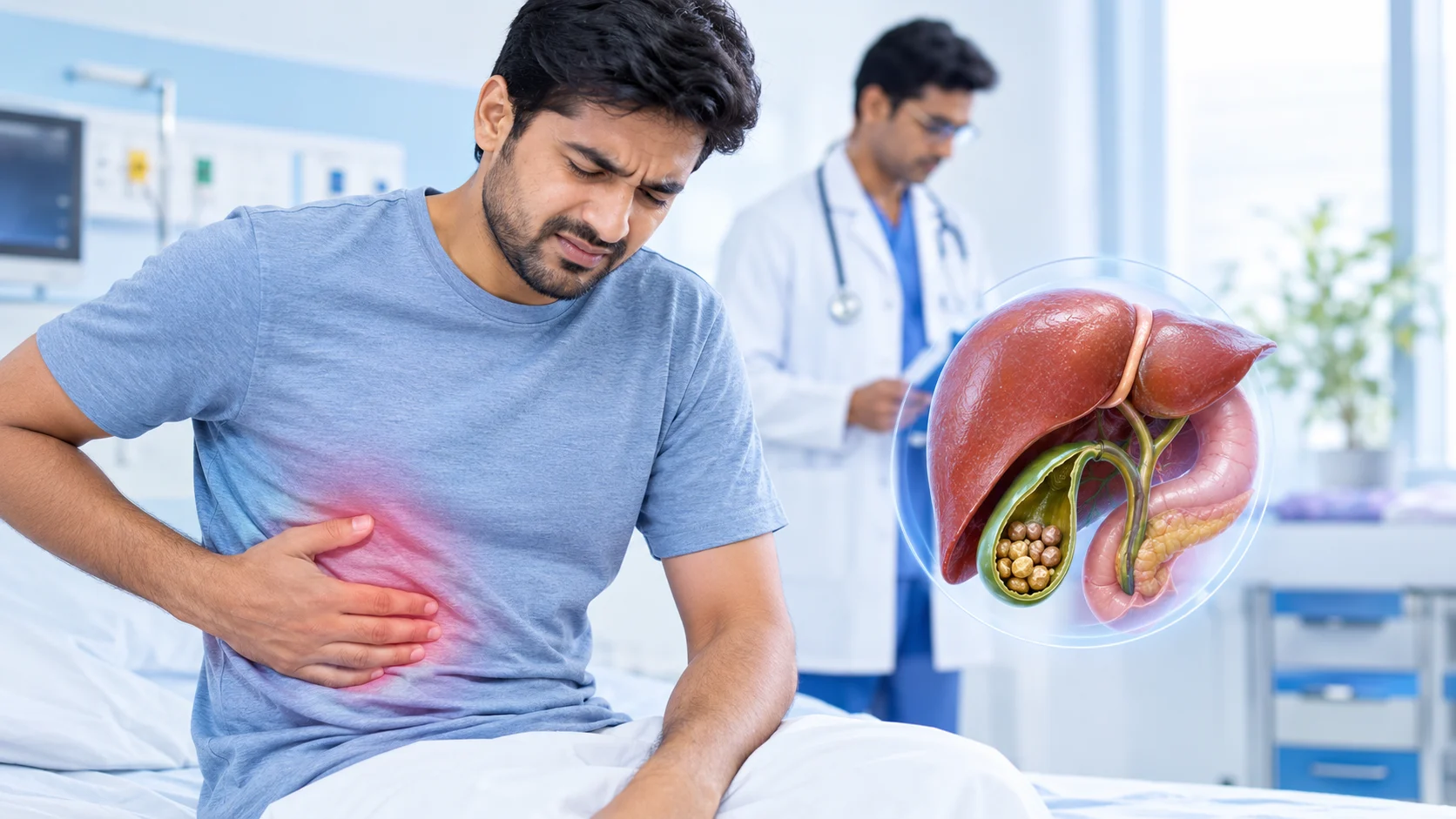
What Are Gallbladder Stones?
Gallstones are hardened deposits that develop inside the gallbladder. The gallbladder sits underneath the liver and stores bile, a digestive fluid that helps the body process fats. Sometimes substances in bile become concentrated and harden into stones. They can range from tiny, gravel-like particles to larger stones, although their size varies considerably from person to person.
Plenty of people carry gallstones for years without knowing they have them. These are often called silent gallstones. If they are discovered accidentally during an examination or scan and are not causing symptoms, treatment may not be necessary.
The problem begins when a stone blocks a bile duct or causes inflammation. At that point, appropriate gallbladder stone treatment may be needed to prevent symptoms from recurring or complications from developing.
What Causes Gallbladder Stones?
There isn’t always one single cause of gallstones. They can develop because of changes in bile chemistry, problems with gallbladder emptying, genetics and several lifestyle or medical factors.
Too much cholesterol in bile is one common reason cholesterol stones develop. Another type, called pigment stones, can be associated with excess bilirubin.

The gallbladder may also contribute to stone formation if it does not empty properly, allowing bile to remain concentrated for longer periods. Several factors can increase the risk of gallstones, including:
- Obesity or being significantly overweight
- Rapid weight loss
- Diabetes
- Family history of gallstones
- Certain medical conditions
- Changes in bile composition
- Problems with normal gallbladder emptying
If gallstones run in your family or you experience recurring abdominal pain, discussing your symptoms and risk factors with a doctor can help determine whether you need evaluation and possible gallbladder stone treatment.
How Do I Know If I Need Surgery for Gallstones?
This is one of the most common questions people have after being diagnosed with gallstones. Surgery may become necessary when gallstones repeatedly cause painful attacks, block a bile duct, cause inflammation or lead to complications such as infection, jaundice or pancreatitis.
Typical gallstone attacks can cause sudden or severe pain in the upper-right part of the abdomen. The pain may sometimes spread toward the back or right shoulder and can occur after eating, particularly following a heavy or fatty meal.
However, finding gallstones on a scan does not automatically mean that surgery is necessary. If stones are discovered incidentally and have never caused symptoms, doctors may recommend observation rather than immediate surgery. The decision depends on the person’s symptoms, medical history, imaging results and overall health.
The important question is not simply whether stones are present. The more useful question is whether they are causing symptoms or complications. If painful episodes keep returning, it is worth discussing gallbladder stone treatment with a qualified surgeon rather than repeatedly managing the pain at home.
Symptoms of Gallbladder Stones to Watch During Gallbladder Stone Treatment
Gallstones do not always produce symptoms. When they do, the symptoms can follow a recognizable pattern. Common gallstones symptoms may include:
- Sudden or persistent pain in the upper-right abdomen
- Pain after meals, particularly fatty meals
- Pain that may spread toward the back or right shoulder
- Nausea
- Vomiting
- Abdominal discomfort
- Fever or chills when infection or inflammation develops
- Yellowing of the skin or eyes, known as jaundice
Severe abdominal pain accompanied by fever, chills or jaundice should not be ignored. These symptoms can indicate a complication requiring prompt medical evaluation. Rather than assuming every episode of abdominal pain is caused by gallstones, proper diagnosis is important before deciding on gallbladder stone treatment.
Treatment Options for Gallbladder Stones
The right treatment depends on whether the stones are causing symptoms, whether complications are present and whether the patient is medically suitable for surgery.
Laparoscopic Gallbladder Surgery
Laparoscopic cholecystectomy is the standard surgical approach for many patients who require gallbladder removal. Instead of one large abdominal incision, the surgeon generally uses several small incisions and a camera to perform the operation. Potential advantages include:
- Smaller incisions
- Less postoperative discomfort for many patients
- Shorter hospital stays
- Faster recovery compared with traditional open surgery in suitable cases
- Earlier return to normal activities
For patients with symptomatic gallstones, laparoscopic surgery is often the preferred form of gallbladder stone treatment when medically appropriate.
Open Gallbladder Surgery
Open surgery involves a larger abdominal incision and may be recommended when laparoscopic surgery is not safe or practical.
Situations such as severe inflammation, unusual anatomy, extensive scarring or certain complications may require the surgeon to change the planned approach. Open surgery does not mean that laparoscopic surgery failed. It can simply be the safer option for a particular patient or situation.
Medication
In selected cases, oral medications such as ursodiol may be considered to gradually dissolve certain cholesterol stones.
This approach is limited. It may take months or even years, is not appropriate for every type of gallstone and stones can return after treatment stops. For patients with recurring symptomatic stones, surgery is often considered a more definitive form of gallbladder stone treatment.
Other Procedures
Other procedures, including shock-wave lithotripsy or percutaneous drainage, may have a role in selected high-risk patients. These approaches are not usually the first choice for routine symptomatic gallstones, but they may be considered when standard surgery is unsuitable.
Which Surgery Is Best for a Gallbladder Stone?
For many patients who require surgery, laparoscopic cholecystectomy is the preferred approach.
It generally involves smaller incisions and can allow a shorter hospital stay and quicker recovery compared with open surgery when the laparoscopic approach is appropriate. Open surgery may be recommended when severe inflammation, scarring, abnormal anatomy or complications make laparoscopic surgery unsafe or impractical.
There is no single surgical approach that is automatically best for every patient. Your symptoms, ultrasound findings, medical history, overall health and the surgeon‘s assessment all influence the safest gallbladder stone treatment for your situation.
When Surgery Is Needed — And When It Isn’t
Gallstones do not automatically require surgery. If stones are asymptomatic and are discovered accidentally, doctors may recommend observation rather than immediate treatment. Surgery becomes more likely when gallstones cause:
- Repeated painful attacks
- Bile duct blockage
- Gallbladder inflammation
- Infection
- Jaundice
- Pancreatitis
- Other significant complications
This distinction is important because many people become worried as soon as gallstones appear on an ultrasound report. The presence of stones alone does not necessarily mean that an operation is required. The symptoms and clinical situation determine whether gallbladder stone treatment is necessary.
Diagnosis Before Choosing Gallbladder Stone Treatment
A proper diagnosis should come before deciding on treatment. Evaluation may include:
- Ultrasound examination
- Blood tests
- Medical and symptom history
- Physical examination
- Liver function assessment when appropriate
- Additional imaging or testing when clinically necessary
- Pre-anesthesia evaluation if surgery is planned
An ultrasound is commonly used to identify gallstones and evaluate the gallbladder.
At Meyash Hospital, this diagnostic stage is an important part of safe gallbladder stone treatment. The findings help the medical team determine whether surgery, medication or monitoring is the most appropriate option.
Treatment Approach at Meyash Hospital
Meyash Hospital’s approach to gallbladder stone treatment in Hisar focuses on evaluating each patient individually before recommending a treatment plan.
The approach described in this article includes laparoscopic techniques when medically appropriate, advanced HD laparoscopic imaging equipment and case-by-case evaluation by Dr. Yashpal Singla and the surgical team.
Factors such as symptoms, stone-related complications and inflammation are considered before selecting the appropriate surgical approach. The goal is not simply to perform surgery. It is to determine whether surgery is actually necessary and, when it is, identify the safest approach for the individual patient.
Recovery After Gallbladder Stone Treatment: What to Expect
Recovery after laparoscopic gallbladder surgery is generally quicker than recovery from open surgery, although the exact timeline varies between patients.

After surgery, your surgeon may recommend:
- Walking short distances as soon as it is safe
- Avoiding heavy lifting for the period advised by your surgeon
- Starting with lighter meals
- Following wound-care instructions
- Keeping surgical incisions clean
- Attending follow-up appointments
- Taking prescribed medications as directed
Many patients can return to desk-based work relatively quickly after uncomplicated laparoscopic surgery, while people whose jobs involve heavy physical activity may need additional recovery time.
Your surgeon should provide the final timeline because gallbladder stone treatment recovery can vary according to the surgical approach, overall health and individual healing.
Can I Remove Gallbladder Stones Without Surgery?
In selected cases, medication may be used to dissolve certain small cholesterol stones. However, this approach has important limitations. Treatment can take a long time, it does not work for every type of gallstone and stones may return after treatment.
For patients with recurrent symptoms or complications, non-surgical treatment may not provide the same definitive solution as gallbladder removal.
If you want to avoid surgery, discuss your options with your doctor rather than relying on home remedies or unproven treatments. The most appropriate gallbladder stone treatment depends on the type of stones, symptoms and overall medical condition.
Can a Person Live a Normal Life After Gallbladder Removal?
Yes. Most people can return to a normal lifestyle after gallbladder removal. The liver continues to produce bile after surgery. Instead of being stored in the gallbladder, bile flows directly from the liver toward the intestine.
Some people notice temporary digestive changes after surgery, particularly with very fatty or greasy meals. These symptoms often improve as the body adjusts. Your surgeon can provide individualized dietary and activity guidance during gallbladder stone treatment recovery.
Prevention Tips to Reduce Future Gallstone Problems
Not every case of gallstones is preventable, and good gallbladder stone treatment planning also includes understanding factors that may reduce future risk. Helpful habits can include:
- Maintaining a healthy and stable weight
- Avoiding rapid weight loss
- Eating a balanced diet
- Including adequate dietary fiber
- Limiting heavily processed and very fatty foods
- Staying physically active
- Managing underlying health conditions
- Following medical advice if you have a history of gallstones
If you have already experienced gallstone symptoms, prevention alone should not replace medical evaluation.
Conclusion
Gallbladder stone treatment is not one-size-fits-all. People with asymptomatic gallstones may not need immediate treatment, while people with repeated painful attacks, bile duct obstruction, inflammation or complications may need surgery.
For many patients who require an operation, laparoscopic cholecystectomy is the preferred approach when medically appropriate. It generally involves smaller incisions and can provide a relatively quick recovery. At Meyash Hospital, Hisar, Dr. Yashpal Singla and the surgical team evaluate each patient’s symptoms and clinical findings before recommending an appropriate treatment approach.
If abdominal pain has been returning repeatedly, don’t rely only on online searches. A proper medical evaluation can determine whether you need monitoring, medication or gallbladder stone treatment through surgery.
Considering Gallbladder Stone Treatment? Let’s Talk
If gallstone pain has been disrupting your meals, work or sleep, don’t wait for symptoms to become more severe.
Meyash Hospital, Hisar offers laparoscopic gallbladder stone treatment under Dr. Yashpal Singla’s care, with evaluation and treatment planning based on each patient’s condition.
Book a consultation to discuss your symptoms and available treatment options.
FAQs About Gallbladder Stone Treatment
Can a person live a normal life after gallbladder removal?
Yes. Most people can return to their normal routine after recovering from gallbladder removal. The liver continues producing bile, which flows directly into the intestine after the gallbladder has been removed.
Can I remove gallbladder stones without surgery?
In selected cases, medication may dissolve certain small cholesterol stones. However, treatment can take months or years and stones may return. For symptomatic gallstones, surgery may provide a more definitive solution.
How painful is gallbladder stone treatment recovery?
Recovery after laparoscopic surgery is generally manageable, although discomfort varies between patients. Prescribed pain medication, appropriate activity and following postoperative instructions can help support recovery.
Do all gallstones need treatment?
No. Gallstones that cause no symptoms often do not require immediate treatment. Surgery becomes more likely when stones cause repeated pain, blockage, inflammation or other complications.
How long does gallbladder stone surgery recovery take?
Recovery varies depending on the surgical approach and the patient’s health. Many people return to light daily activities relatively quickly after uncomplicated laparoscopic surgery, while physically demanding work may require additional time.
What happens if gallstones are left untreated despite symptoms?
Repeatedly symptomatic gallstones can potentially cause complications such as gallbladder inflammation, infection, bile duct blockage or pancreatitis. If symptoms keep returning, medical evaluation is important.
This article has been reviewed by the medical team at Meyash Hospital, Hisar. For personalized medical advice, consult Dr. Yashpal Singla or a qualified specialist directly.

