
Can hernia come back after surgery?
Yes, a hernia can sometimes return after surgery. This is called hernia recurrence. Although modern surgical techniques have significantly reduced recurrence rates, factors like poor healing, heavy lifting, obesity, smoking, or infection can increase the chances of the hernia coming back.
For many patients, hernia surgery feels like the final step — the bulge is gone, the discomfort improves, and life starts returning to normal. So when people hear that a hernia can recur, it creates understandable anxiety. The good news is that recurrence is not extremely common, especially with modern laparoscopic and mesh-based repair techniques. But understanding why it happens and how to reduce the risk is important for long-term recovery.
What is a Hernia?
A hernia occurs when an organ or tissue pushes through a weak spot in the surrounding muscle or connective tissue.
Common types include:
- Inguinal hernia (groin)
- Umbilical hernia (near the navel)
- Incisional hernia (after surgery)
- Hiatal hernia (upper stomach area)
- Femoral hernia
Hernias usually do not heal on their own. Surgery is often the only permanent treatment.
Can Hernia Come Back After Surgery?
This is one of the most common questions patients ask after recovery.
The answer is yes — hernia recurrence can happen. However, recurrence rates today are much lower than they used to be because of:
- Better surgical techniques
- Use of surgical mesh
- Advanced laparoscopic procedures
- Improved post-surgery care
Studies suggest recurrence rates generally range between:
- 1%–5% in laparoscopic mesh repair
- 5%–15% in older or complex repairs
The risk depends on several patient and surgical factors.
Why Does a Hernia Come Back After Surgery?
Understanding recurrence helps patients protect their recovery better.
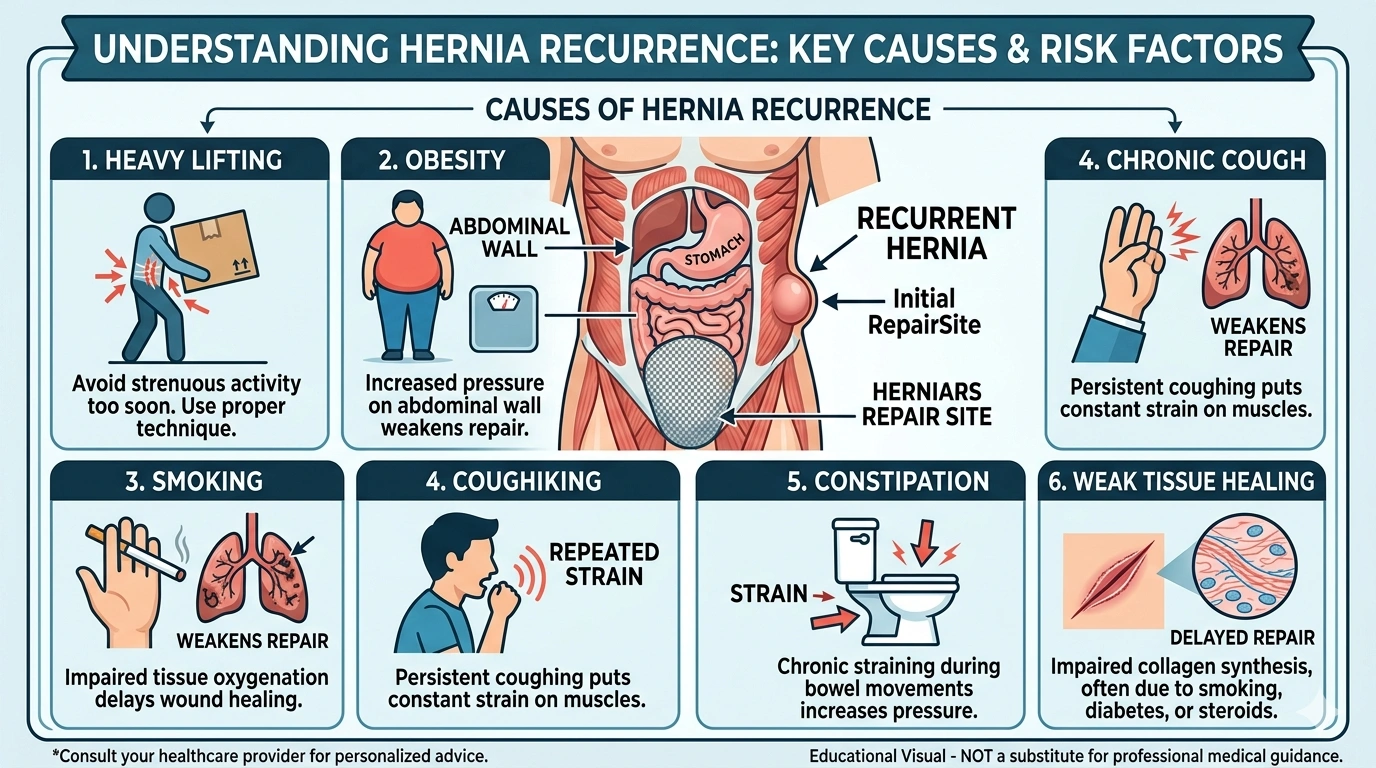
1. Weak Tissue Healing
Some people naturally have weaker connective tissues, making healing less strong after surgery.
This is more common in:
- Older adults
- Smokers
- Patients with chronic illnesses
2. Heavy Lifting Too Soon
One of the biggest reasons recurrence happens is returning to physical strain too early.
Activities that increase abdominal pressure:
- Weightlifting
- Strenuous gym workouts
- Carrying heavy objects
- Intense coughing without support
Even if external wounds look healed, internal tissues may still be recovering.
3. Obesity
Excess body weight constantly puts pressure on the abdominal wall.
This pressure:
- Weakens repaired tissues
- Increases strain on mesh repairs
- Slows healing
Obesity is one of the strongest risk factors for hernia recurrence.
4. Infection After Surgery
Surgical site infections can weaken the repaired area.
When healing is interrupted:
- Tissues may not close properly
- Mesh support can become compromised
- Long-term repair strength decreases
This is why proper wound care matters so much after surgery.
5. Chronic Constipation
Repeated straining during bowel movements increases abdominal pressure significantly.
Over time, this pressure can stress the repaired area and contribute to recurrence.
6. Chronic Cough
Persistent coughing from:
- Smoking
- Asthma
- Lung disease
creates repeated force against the abdominal wall.
7. Poor Surgical Technique
Although uncommon in experienced centers, improper repair technique can increase recurrence risk.
This is why choosing an experienced surgical team matters. Hospitals like Meyash Hospital focus on advanced laparoscopic and mesh-based hernia repair techniques that improve long-term outcomes.
Symptoms of Hernia Recurrence
Sometimes recurrence develops slowly and subtly.
Watch for:
- A new bulge near the previous surgical area
- Pain or discomfort while lifting
- Burning sensation
- Pressure in the abdomen or groin
- Swelling that becomes more visible when standing
Some patients notice symptoms months or even years after surgery.
Is Hernia Recurrence Dangerous?
Not always immediately — but it should never be ignored.
A recurrent hernia can:
- Grow larger over time
- Become painful
- Affect daily activities
- Lead to complications like strangulation
Strangulated hernia occurs when blood supply gets cut off to trapped tissue. This becomes a medical emergency.
When Should You See a Doctor?
Consult a specialist if:
- You notice a new swelling
- Pain increases around the old surgery site
- There is redness or tenderness
- The bulge becomes hard
- Nausea or vomiting occurs
Early diagnosis allows easier treatment and prevents complications.
How is Recurrent Hernia Diagnosed?
Doctors usually diagnose recurrence through:
1. Physical Examination
Checking for visible or palpable swelling.
2. Ultrasound
Useful for detecting small recurrent hernias.
3. CT Scan
Provides detailed imaging for complex or recurrent cases.
Accurate diagnosis helps determine the best repair method.
Treatment Options for Recurrent Hernia
Treatment depends on:
- Hernia size
- Symptoms
- Previous repair type
- Overall patient health
1. Observation (Rare Cases)
Small, painless recurrences may sometimes be monitored temporarily.
However, most recurrent hernias eventually require repair.
2. Open Hernia Repair
Traditional surgery may be used in:
- Large recurrent hernias
- Complex abdominal wall defects
3. Laparoscopic Hernia Surgery
Modern laparoscopic repair is often preferred because it:
- Uses smaller cuts
- Causes less pain
- Allows quicker recovery
- Reduces recurrence risk
4. Mesh Repair
Surgical mesh reinforces weakened tissue.
Benefits include:
- Better structural support
- Lower recurrence rates
- Improved long-term strength
Advanced centers like Meyash Hospital commonly use minimally invasive mesh repair techniques for safer recovery and improved outcomes.
Recovery After Repeat Hernia Surgery
Recovery after recurrent hernia repair may take slightly longer than the first surgery.
Typical timeline:
- 1–2 weeks for light activities
- 4–6 weeks for normal routine
- Several months for complete internal healing
Proper recovery care becomes even more important after repeat surgery.
What to Avoid After Hernia Surgery
Preventing recurrence often depends on post-surgery habits.
Avoid:
- Heavy lifting
- Smoking
- Sudden strenuous exercise
- Ignoring constipation
- Skipping follow-ups
Patients who follow recovery instructions carefully usually experience better long-term results.
Prevention Tips to Reduce Hernia Recurrence
These preventive steps significantly lower risk:

Maintain Healthy Weight
Reducing abdominal pressure improves healing.
Eat Fiber-Rich Foods
Prevent constipation and straining.
Stop Smoking
Smoking weakens tissue repair.
Exercise Carefully
Strengthen core muscles gradually with medical guidance.
Follow Doctor Instructions
Recovery timelines exist for a reason — rushing healing increases risk.
Does Mesh Completely Prevent Recurrence?

Mesh has dramatically improved hernia surgery success rates, but no surgery guarantees zero recurrence.
Mesh works by:
- Reinforcing weak tissue
- Reducing tension on repair
- Providing long-term support
However, factors like obesity, infection, or excessive strain can still cause recurrence.
Long-Term Outlook After Hernia Surgery
The majority of patients recover successfully and never experience recurrence.
Modern surgical advancements have:
- Reduced complication rates
- Improved recovery speed
- Increased long-term repair durability
Choosing experienced surgeons and maintaining healthy lifestyle habits are the biggest contributors to lasting success.
Conclusion
So, can hernia come back after surgery? Yes — but recurrence is far less common today than it once was. Modern mesh repair techniques and laparoscopic procedures have significantly improved long-term success rates.
The most important factors are timely treatment, proper recovery, healthy lifestyle habits, and choosing experienced surgical care. I am Dr. Yashpal Singla, with 15 years of experience. I recommend paying attention during the healing period, as it can make a major difference in preventing recurrence and ensuring lasting recovery.
If you are experiencing hernia symptoms or concerns after previous surgery, consult the specialists at Meyash Hospital for advanced diagnosis and minimally invasive hernia treatment tailored to your condition.
FAQs
Q1: How common is hernia recurrence after surgery?
Recurrence rates are generally low, especially with laparoscopic mesh repair techniques.
Q2: Can lifting weights cause hernia recurrence?
Yes, heavy lifting too soon after surgery increases abdominal pressure and recurrence risk.
Q3: Does mesh repair last permanently?
In most cases, mesh repair provides long-term support, but recurrence can still occur in some patients.
Q4: How do I know if my hernia has returned?
A new bulge, discomfort, swelling, or pain near the old surgical site may indicate recurrence.
Q5: Is recurrent hernia surgery more complicated?
It can be slightly more complex than the first surgery, but modern laparoscopic techniques improve outcomes significantly.

