
Keyhole surgery is safe and used millions of times a year, but no operation is completely without risk, and it helps to know what to watch for. The most common complications after laparoscopic surgery are mild and treatable, things like minor bleeding, a wound infection, shoulder pain from the gas used during surgery, and slower healing. Serious problems are rare.
What matters is spotting the early symptoms and knowing how to lower your chances in the first place. Here’s the plain-language version.
A Quick Recap: What Is Laparoscopic Surgery?
Laparoscopic surgery, also called keyhole surgery, uses a few small cuts instead of one big one. The surgeon puts a thin camera, a laparoscope, through one cut to see inside on a screen, and slim instruments through the others to do the work.
It’s used for gallbladder removal, hernia repair, appendix surgery, and plenty more. Because the cuts are small, it usually means less pain and quicker healing than open surgery, and that’s also why it tends to come with fewer complications.
Are Complications Actually Common?
No, and this is worth saying clearly so you don’t worry more than you need to. Most people recover from keyhole surgery with no major problems at all. In fact this method has fewer complications than open surgery, thanks to the smaller wounds and gentler handling of tissue. When something does crop up,
Being aware of complications after laparoscopic surgery isn’t about fear, it’s about catching anything early so it stays minor. Understanding the possible complications after laparoscopic surgery can help you recover with greater confidence and know when to seek medical advice if needed.
Common Complications After Laparoscopic Surgery
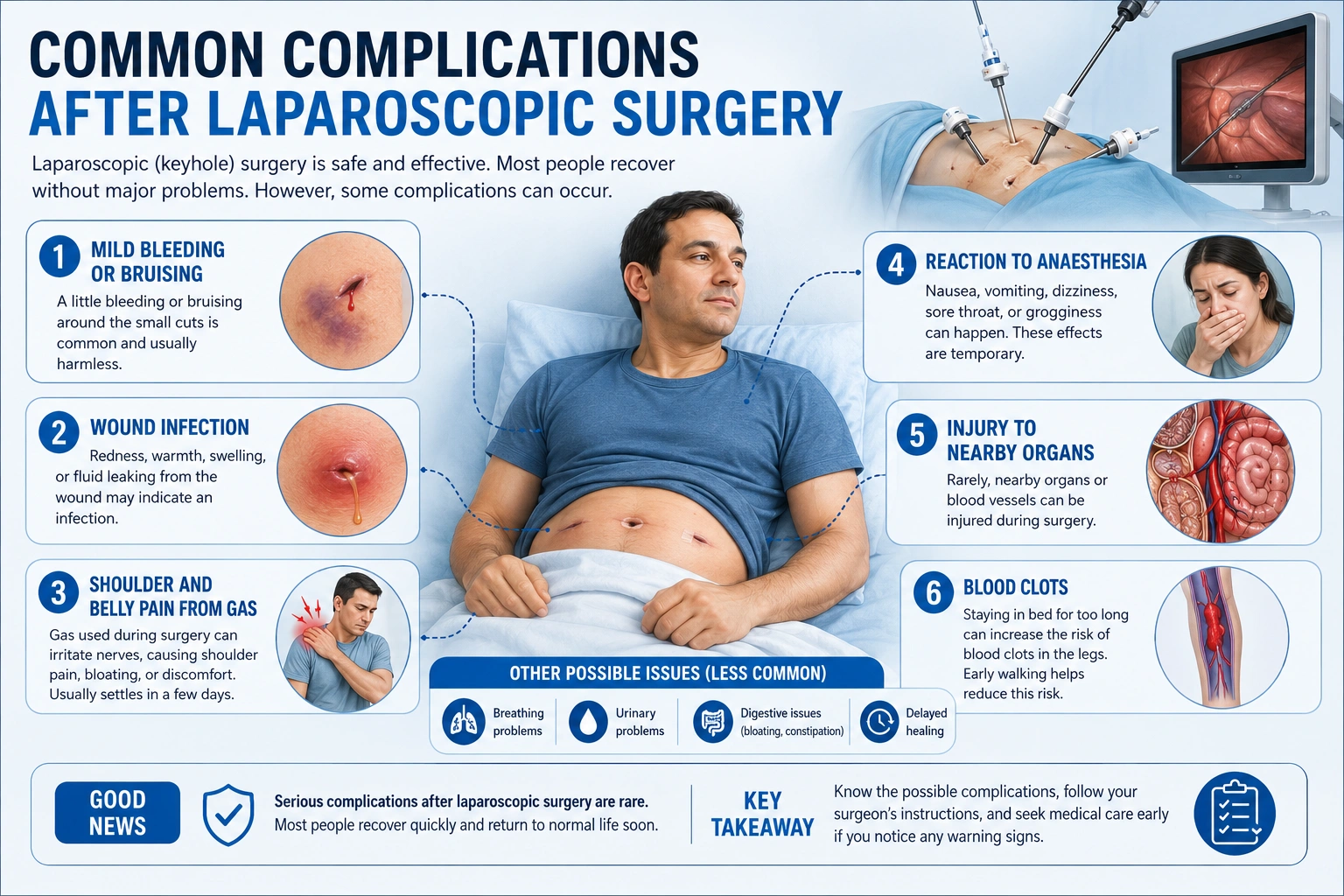
Here are the issues that can sometimes turn up.
1. Mild Bleeding or Bruising
A little bleeding or some bruising around the small cuts is common and usually harmless. It’s the heavy or ongoing kind of bleeding that needs medical attention, not the odd bruise.
2. Wound Infection
Now and then one of the small cuts can get infected. You’d notice redness, warmth, swelling, or fluid leaking from the wound. Most infections clear up easily with good wound care or a course of medicine, especially when caught early.
3. Shoulder and Belly Pain From Gas
During keyhole surgery, gas is used to inflate the abdomen so the surgeon can see and work. Afterward, some of that gas can irritate nerves and cause shoulder pain or bloating. It feels odd but it’s normal, and it usually settles within a few days as your body absorbs the gas.
4. Reaction to Anaesthesia
Some people feel nauseous, dizzy, or have a sore throat after the anaesthesia. These effects are short-lived and fade as your body shakes off the medication.
5. Injury to Nearby Organs
In rare cases, a nearby organ or blood vessel can be affected during the operation. Experienced surgeons take great care to avoid this, and it’s one more reason the surgeon’s skill matters so much.
6. Blood Clots
Lying still for too long after surgery can raise the risk of a clot forming in your legs. The fix is simple and it’s why nurses get you up early. Gentle walking dramatically lowers this risk.
Symptoms You Should Never Ignore
Most discomfort after surgery is part of normal healing, but a few symptoms deserve a quick call to your doctor. Get in touch if you notice:
- Severe pain, or pain that keeps getting worse instead of better
- A high fever or chills
- A wound that’s red, swollen, or leaking pus
- Heavy bleeding
- Swelling, pain, or redness in one leg
- Trouble breathing or chest pain
That last pair needs emergency care, not a phone call. The rest are worth flagging early, because a small problem reported quickly almost always stays small.
How to Prevent Complications After Laparoscopic Surgery

The good news is that you have real influence over how smoothly you heal. A handful of habits do most of the work:
- Walk early and gently, since movement prevents blood clots and helps healing along
- Keep your wounds clean and dry, which is the simplest way to avoid infection
- Take your medicines exactly as prescribed, and finish any antibiotics fully
- Eat well, leaning on protein for tissue repair and fibre so you’re not straining on the toilet
- Hold off on heavy lifting until your surgeon says it’s fine
- If you smoke, pause it, because smoking slows healing and raises infection risk
- Go to every follow-up appointment, even when you feel completely fine
Following your surgeon’s advice closely really is the best protection against problems. Most of the complications after laparoscopic surgery that do happen are easier to prevent than to treat.
What Raises or Lowers Your Risk?
Not everyone faces the same odds, and a few things tip the balance. Your general health matters, since conditions like diabetes or obesity can slow healing and make infection a little more likely. Smoking does the same. Age plays a small part too, as older bodies tend to recover more gradually.
The procedure itself is a factor. A longer or more complex operation carries slightly more risk than a quick, routine one. And the surgeon’s experience genuinely counts, because a surgeon who performs keyhole procedures regularly handles the unexpected with more ease.
The encouraging part is how much sits in your hands. Managing conditions like diabetes, stopping smoking before surgery, staying a healthy weight, and choosing a skilled team at a well-equipped hospital all push your risk down. You can’t control everything, but you can control a surprising amount of it and lower your chances of complications after laparoscopic surgery.
When to See a Doctor
Trust the overall direction of your recovery. It should feel like steady, if slow, improvement. When it goes the other way, pay attention. Growing pain, a fever, or discharge from the wound all warrant a prompt call. Sudden chest pain, trouble breathing, or a swollen, painful leg need emergency care right away.
The simplest rule is this. If something feels wrong, it’s always safer to get it checked than to talk yourself out of it. Early attention can prevent minor complications after laparoscopic surgery from becoming more serious.
What Recovery Usually Looks Like

Most people heal from keyhole surgery without any of the issues above. You’ll likely be walking the same day, home within a day or two, and back to light activity within a few days. Mild soreness around the cuts fades over a week or so.
Even when a minor complication does occur, like a small infection or bruising, it usually clears within one to two weeks with proper care. The key is staying alert without being anxious, looking after your wounds, and reaching out early if anything seems off.
It also helps to set realistic expectations for the first week. Feeling tired is normal, since your body is putting energy into healing. A bit of bloating, some tenderness at the cut sites, and a slightly reduced appetite are all common and pass quickly.
None of these are complications after laparoscopic surgery, just the body’s ordinary response to surgery. Knowing that ahead of time saves a lot of unnecessary worry and helps you tell the difference between routine healing and a sign that actually needs a call.
Conclusion
Complications after laparoscopic surgery are uncommon, and the ones that do happen are usually mild and very treatable. Minor bleeding, a wound infection, gas-related shoulder pain, and slower healing top the list, while serious problems are rare in skilled hands. The two things that protect you most are simple.
First, prevent what you can by walking early, keeping wounds clean, following your medicine instructions, eating well, and not rushing back to heavy lifting. Second, know the symptoms that mean “call now,” like worsening pain, fever, wound discharge, or leg swelling, and act on them quickly.
Do those two things and recovery almost always stays smooth. When in doubt, a quick check with your doctor beats waiting and worrying.
At Meyash Hospital, patient safety comes first. Our skilled surgeons use advanced laparoscopic techniques and modern equipment to keep risks low and recovery smooth. We give clear guidance before surgery and watch over you carefully afterward to prevent complications.
From start to finish, our patient-first team is there so you can heal with confidence.
This article is reviewed by the expert team at Meyash Hospital. If you are experiencing symptoms, consult the laparoscopic specialists Dr. Yashpal Singla for expert diagnosis and advanced treatment.
Frequently Asked Questions (FAQs)
Q.1 How common are complications after laparoscopic surgery?
They’re uncommon. Keyhole surgery has fewer complications than open surgery, and when issues do occur they’re usually mild and treatable.
Q.2 Is shoulder pain normal after keyhole surgery?
Yes. Shoulder pain from the gas used during surgery is common and usually goes away within a few days as the gas is absorbed.
Q.3 How long do minor complications take to clear up?
Most mild issues like bruising or a small infection settle within one to two weeks with proper care and any prescribed medicine.
Q.4 Can complications after laparoscopic surgery be prevented?
Many can be reduced by walking early, keeping wounds clean, following medicine instructions, eating well, and attending your follow-ups.
Q.5 When should I worry about pain after surgery?
Mild soreness is normal, but pain that keeps increasing, especially with fever or wound discharge, should be checked by a doctor quickly.

