
Hernia surgery is one of the most commonly performed procedures and, in most cases, recovery is smooth. But like any surgery, there is always a small risk of infection. Sometimes the symptoms are obvious. Sometimes they begin subtly — a little more redness, unusual pain, mild fever, or fluid near the incision. Patients often dismiss these early signs, assuming they are part of normal healing.
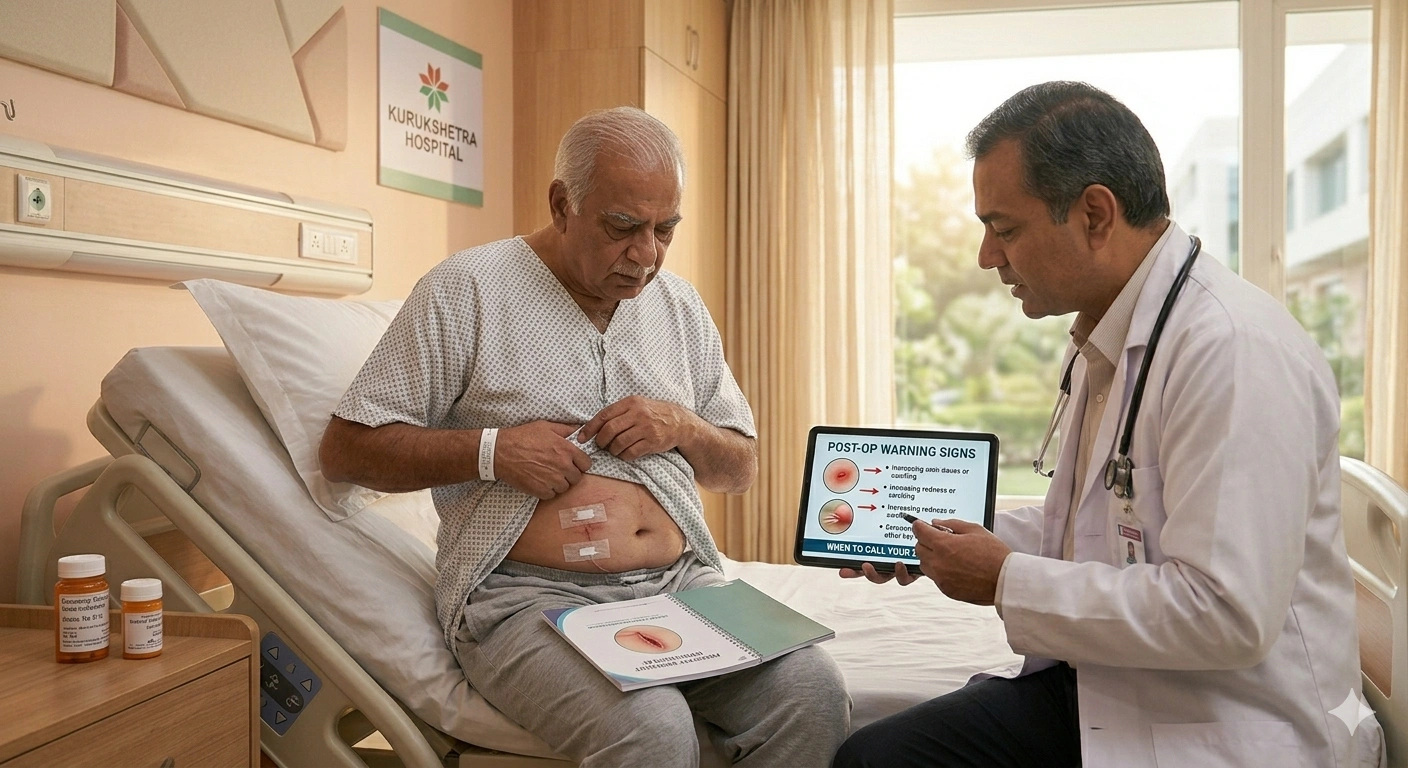
That is exactly why understanding the signs of infection after hernia surgery matters. Early identification can prevent complications, speed up recovery, and reduce the risk of serious problems affecting the surgical repair. Most infections are treatable when addressed quickly, but delaying treatment can allow the infection to spread deeper into tissues.
The goal is not to panic over every symptom — it is to know what is normal healing and what deserves medical attention.
What Happens During Hernia Surgery?
A hernia develops when internal tissue pushes through a weak area in the muscle wall. Surgery repairs that weakness using stitches, mesh, or both.
There are two common approaches:
Open Hernia Surgery
A larger incision is made to access and repair the hernia.
Laparoscopic Hernia Surgery
Small incisions and a camera-guided technique are used for minimally invasive repair.
Both methods are generally safe, but because surgery involves cuts in the skin and internal tissue handling, there is always some infection risk.
Is Infection Common After Hernia Surgery?
Most patients recover without complications. Infection after hernia surgery is relatively uncommon, especially when proper surgical techniques and postoperative care are followed.
However, infections can still occur due to:
- Bacteria entering the incision
- Poor wound care
- Weakened immunity
- Underlying health conditions
- Mesh-related complications
The risk may be slightly higher in:
- Smokers
- Diabetic patients
- Obese individuals
- Elderly patients
- Patients with poor nutrition
At advanced centers like Meyash Hospital, strict sterilization protocols and minimally invasive surgical methods help reduce postoperative infection risks significantly.
Why Infections Develop After Surgery
The body naturally tries to heal surgical wounds. But bacteria can interfere with this healing process.
Common causes include:
Contamination During Healing
Even small exposure to bacteria can trigger infection if wound care is poor.
Fluid Collection
Fluid buildup under the skin creates an environment where bacteria may grow.
Poor Blood Supply
Smoking, diabetes, and obesity reduce circulation and slow healing.
Weak Immune Response
Patients with low immunity struggle to fight bacteria effectively.
Mesh Infection
In some cases, surgical mesh used during repair can become infected, though this is uncommon.
Normal Healing vs Infection
Many patients become anxious because normal healing symptoms can resemble infection initially.
Normal Healing Symptoms
- Mild redness near incision
- Slight swelling
- Mild discomfort
- Bruising
- Temporary tightness
These symptoms usually improve gradually.
Possible Infection Signs
- Increasing redness
- Worsening pain
- Fever
- Thick discharge
- Bad smell
- Swelling increasing instead of improving
The key difference is progression. Normal healing gets better slowly. Infection symptoms usually worsen over time.
Signs of Infection After Hernia Surgery
Recognizing symptoms early can prevent complications.

1. Increasing Redness Around the Incision
A small amount of redness immediately after surgery is common.
However, warning signs include:
- Redness spreading outward
- Skin becoming hot to touch
- Bright or deep red discoloration
This may indicate bacterial inflammation.
2. Swelling That Continues to Increase
Some swelling is expected after surgery.
Concerning swelling may involve:
- Rapid enlargement
- Hardness near the incision
- Painful pressure sensation
Swelling accompanied by fever or discharge requires urgent evaluation.
3. Fever After Surgery
A mild temperature increase during the first day may occur temporarily.
Possible infection-related fever includes:
- Persistent fever above 100.4°F (38°C)
- Chills
- Body aches
- Weakness
Fever combined with wound symptoms strongly suggests infection.
4. Pus or Unusual Discharge
One of the clearest signs of infection after hernia surgery is abnormal drainage.
Possible concerning discharge:
- Yellow pus
- Green fluid
- Thick cloudy discharge
- Foul-smelling fluid
Clear fluid may not always indicate infection, but colored or foul-smelling drainage should never be ignored.
5. Worsening Pain Instead of Improvement
Pain should gradually reduce after surgery.
Warning signs include:
- Sharp worsening pain
- Pain becoming severe suddenly
- Burning sensation
- Pain spreading around the incision
Persistent worsening pain often indicates inflammation or infection.
6. Warm Skin Around the Surgical Area
Infected tissue often feels warmer due to increased blood flow and inflammation.
Warmth with redness and tenderness may signal infection.
7. Delayed Healing
Incisions usually show gradual healing within days.
Possible infection-related healing problems:
- Wounds reopening
- Persistent wetness
- Skin breakdown
- No visible improvement
8. Fatigue and Weakness
The body uses energy to fight infection.
Symptoms may include:
- Extreme tiredness
- Loss of appetite
- General weakness
- Feeling unwell overall
These symptoms become more important when combined with wound changes.
Types of Hernia Surgery Infections
Not all infections are equally serious.
Superficial Skin Infection
Affects only the outer incision area.
Usually manageable with antibiotics and wound care.
Deep Tissue Infection
Involves deeper muscle layers.
May require drainage or additional treatment.
Mesh Infection
Rare but more complicated.
Possible symptoms:
- Persistent fever
- Ongoing pain
- Chronic swelling
- Fluid collection
Some mesh infections require surgical intervention.
Who Is at Higher Risk?
Certain factors increase infection risk after hernia surgery.
Diabetes
High blood sugar delays healing.
Smoking
Reduces oxygen delivery to tissues.
Obesity
Excess body weight increases wound stress.
Poor Nutrition
Protein deficiency weakens healing ability.
Weak Immune System
Makes infection harder to control.
Poor Hygiene
Improper wound care increases bacterial exposure.
When Should You Contact a Doctor?
You should contact a doctor immediately if you experience:
- Fever with incision redness
- Thick or foul-smelling discharge
- Severe swelling
- Increasing pain
- Difficulty walking due to pain
- Persistent vomiting
- Shortness of breath
Delaying care can allow infection to spread deeper into tissues.
Diagnosis of Surgical Infection
Doctors evaluate symptoms using:
Physical Examination
Checking redness, swelling, discharge, and pain.
Blood Tests
To identify signs of inflammation or infection.
Ultrasound or CT Scan
Helpful if fluid collection is suspected.
Wound Culture
Fluid samples identify the bacteria causing infection.
Treatment Options
Treatment depends on infection severity.
1. Antibiotics
Most mild infections improve with prescribed antibiotics.
It is important to:
- Complete the full course
- Avoid self-medication
- Follow dosage instructions carefully
2. Wound Cleaning and Dressing
Doctors may:
- Clean the wound
- Drain fluid
- Change dressings regularly
Proper wound care speeds healing.
3. Drainage Procedures
Large infected fluid collections may require drainage.
This reduces pressure and removes infected material.
4. Surgical Intervention
Rarely, severe infections involving mesh or deep tissues may require another surgery.
Early detection often prevents this stage.
Recovery After Infection
Recovery timelines vary based on infection severity.
Mild Infections
May improve within days after treatment begins.
Moderate Cases
Can take several weeks for complete healing.
Severe Infections
May require prolonged monitoring and repeated wound care.
Patients should:
- Rest adequately
- Eat nutritious food
- Stay hydrated
- Avoid smoking
- Attend follow-up visits
Tips to Reduce Infection Risk

Prevention is always better than treatment.
Keep the Wound Clean
Follow all dressing instructions carefully.
Wash Hands Before Touching the Incision
Simple hygiene makes a major difference.
Avoid Smoking
Smoking slows healing significantly.
Control Blood Sugar
Especially important for diabetic patients.
Avoid Heavy Activity Too Early
Overexertion may strain healing tissue.
Eat Protein-Rich Foods
Nutrition supports tissue repair.
Attend Follow-Up Appointments
Doctors can identify problems early.
Long-Term Complications If Infection Is Ignored
Untreated infection can lead to serious complications.
Possible risks include:
- Hernia recurrence
- Chronic pain
- Deep tissue damage
- Mesh complications
- Abscess formation
- Delayed healing
- Systemic infection
The earlier treatment begins, the lower the complication risk.
Emotional Impact of Post-Surgical Infection
Patients often feel anxious or discouraged if recovery becomes complicated.
This is completely understandable.
Remember:
- Most infections are treatable
- Early care improves outcomes
- Recovery may take time, but proper treatment works
Communication with your surgical team helps reduce unnecessary fear and confusion.
Conclusion
Understanding the signs of infection after hernia surgery can help patients identify problems early and seek timely medical care. Mild discomfort and swelling are normal parts of healing, but symptoms like fever, worsening redness, unusual discharge, and increasing pain should never be ignored.
Most postoperative infections can be treated successfully when addressed quickly. The key is paying attention to changes in your body rather than assuming everything is part of normal recovery.
I am Dr. Yashpal Singla with 15 years of experience highly recommend that good wound care, proper hygiene, healthy lifestyle habits, and regular follow-up visits all contribute to safer healing and lower complication risks after hernia surgery.
If you notice unusual pain, swelling, fever, or any signs of infection after surgery, consult the experienced surgical team at Meyash Hospital for timely diagnosis and advanced postoperative care. Early treatment can prevent complications and support safer recovery.
FAQs
Q1: How common is infection after hernia surgery?
Infections are relatively uncommon, especially with proper surgical care and wound management, but they can still occur.
Q2: Is redness after hernia surgery normal?
Mild redness is common initially. However, spreading redness, warmth, or worsening swelling may indicate infection.
Q3: Can hernia mesh get infected?
Yes, although rare, surgical mesh infections can happen and may require specialized treatment.
Q4: How long does infection recovery take?
Mild infections may improve within days, while deeper infections can take several weeks to heal completely.
Q5: When should I seek emergency medical care?
Seek urgent medical attention if you develop high fever, severe swelling, breathing difficulty, or heavy discharge from the surgical site.

