
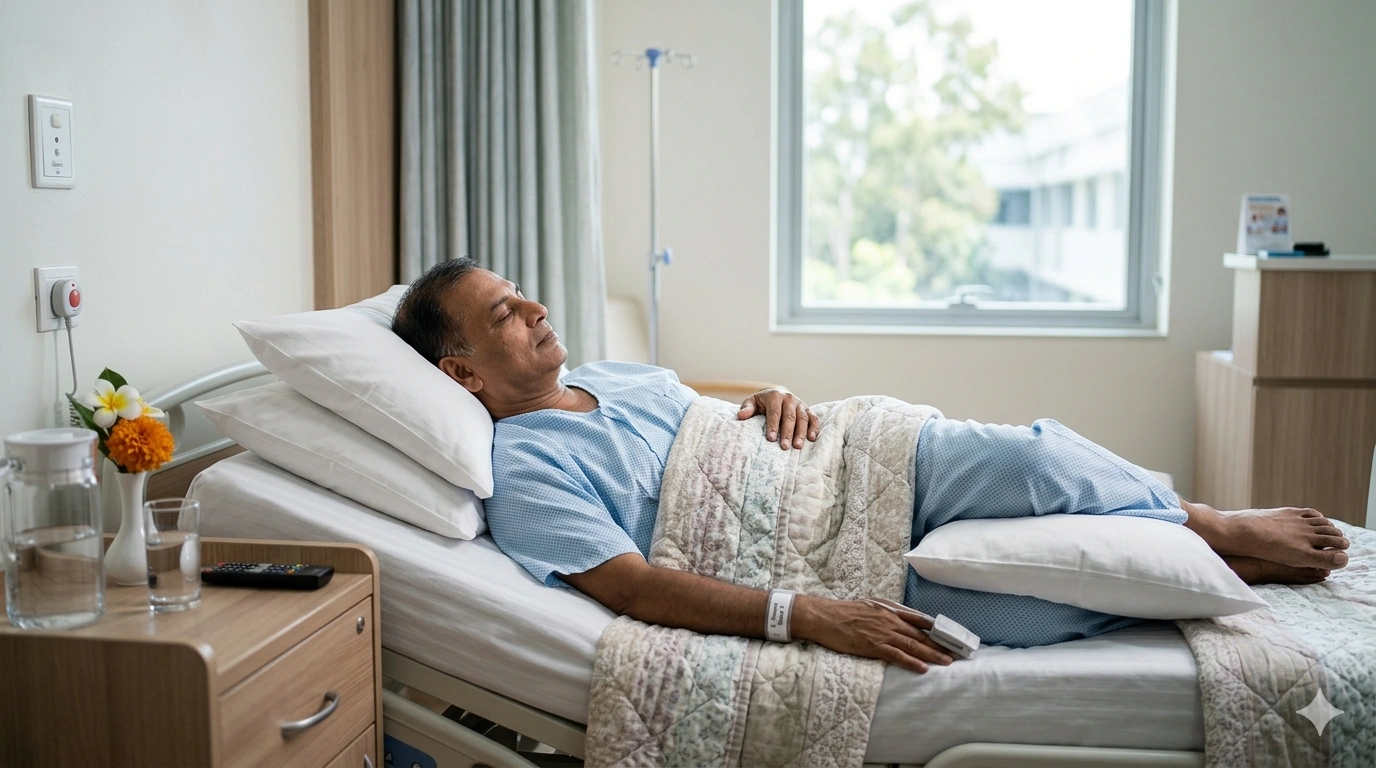
The ideal sleeping position after hernia surgery is lying on your back with your upper body slightly elevated. This posture reduces pressure on the surgical site, prevents strain on the abdominal muscles, and helps you rest comfortably during recovery. In some cases, side sleeping may be allowed after a few weeks, but only with proper support.
Sleep is one of the most important parts of healing after surgery. However, after hernia repair, many patients find it difficult to sleep due to discomfort, fear of pain, or uncertainty about the right posture. A wrong sleeping position can delay healing or even increase the risk of complications. That’s why understanding how to sleep properly after surgery is just as important as the procedure itself.
What is Hernia Surgery?
Hernia surgery is a procedure used to repair a hernia, where an internal organ or tissue pushes through a weak spot in the muscle wall. This condition commonly occurs in the abdomen or groin.
The surgery involves:
- Placing the protruding tissue back in position
- Strengthening the weakened muscle area
- Using mesh support in many cases to prevent recurrence
There are two main types of hernia repair:
- Open Surgery: A larger incision is made for direct repair
- Laparoscopic Surgery: A minimally invasive technique using small incisions and a camera
Laparoscopic surgery is widely preferred because it causes less pain, involves smaller cuts, and allows faster recovery. Advanced centers like Meyash Hospital often use these modern techniques to improve patient comfort and healing outcomes.
Causes of Sleep Discomfort After Hernia Surgery
After surgery, discomfort during sleep is common due to several reasons:

- Surgical pain and inflammation
- Tightness in abdominal muscles
- Sensitivity around the incision area
- Fear of putting pressure on stitches
- Limited movement during early recovery
- Swelling or internal healing
These factors make it difficult for patients to find a comfortable sleeping position after hernia surgery, especially during the first few weeks.
Symptoms of Improper Sleeping Position
Using the wrong sleeping position after hernia surgery can lead to additional discomfort and slow recovery.
Common signs include:
- Increased pain while lying down
- Pulling or stretching sensation in the abdomen
- Difficulty turning or changing position
- Disturbed sleep or frequent waking
- Swelling or pressure near the surgical site
If these symptoms continue, adjusting your sleeping posture can significantly improve comfort.
When to See a Doctor
While mild discomfort is normal, certain symptoms should not be ignored.
Consult a doctor if:
- Pain worsens instead of improving
- You feel a new bulge near the surgical area
- Sleep becomes extremely difficult due to discomfort
- There is redness, swelling, or discharge
- You develop fever along with pain
Early consultation helps ensure there are no complications affecting recovery.
Diagnosis of Post-Surgery Discomfort
If sleep-related discomfort persists, doctors may evaluate the condition using:
- Physical examination
- Imaging tests like ultrasound
- Checking healing progress of stitches
- Assessing muscle strain or swelling
This helps determine whether discomfort is part of normal healing or something that needs treatment.
Treatment Options to Improve Sleep After Hernia Surgery
Improving sleep is an important part of recovery. Treatment options may include:
1. Pain Management
- Prescribed pain relievers
- Anti-inflammatory medications
2. Sleep Support Aids
- Extra pillows for support
- Adjustable beds
- Cushions under knees or sides
3. Lifestyle Adjustments
- Avoid heavy meals before bedtime
- Maintain a consistent sleep schedule
- Stay relaxed and avoid stress
4. Advanced Surgical Recovery Care
Modern minimally invasive surgeries, such as laparoscopic procedures, significantly reduce post-operative pain and improve sleep comfort. Many patients treated at Meyash Hospital experience smoother recovery due to advanced techniques and patient-focused care.
Recovery & Care: Best Sleeping Positions Explained

Choosing the right sleeping position after hernia surgery is essential for comfort and healing.
1. Sleeping on Your Back (Best Position)
This is the most recommended position, especially in the early recovery phase.
Benefits:
- Reduces pressure on the abdomen
- Keeps the body aligned
- Minimizes movement during sleep
Tip:
Use 2–3 pillows to elevate your upper body slightly.
2. Elevated Upper Body Position
Sleeping with your head and chest raised helps:
- Reduce swelling
- Improve breathing
- Prevent acid reflux
Tip:
You can use a wedge pillow or adjustable bed.
3. Side Sleeping (After Initial Recovery)
After a few weeks, side sleeping may be allowed.
Benefits:
- More comfort for some patients
- Reduces stiffness
Important:
- Avoid sleeping on the operated side initially
- Use a pillow between your knees for support
4. Positions to Avoid
Certain positions can delay healing:
- Sleeping on your stomach
- Twisting your body during sleep
- Lying flat without support in early days
These positions increase pressure on the surgical site and should be avoided.
Prevention Tips for Better Sleep Recovery
To improve sleep and avoid complications:
- Follow your doctor’s instructions carefully
- Use proper pillow support
- Avoid sudden movements
- Get out of bed slowly
- Maintain a healthy sleep routine
- Wear comfortable clothing
- Keep your sleeping area supportive and stable
Small adjustments can make a big difference in recovery.
Conclusion
Finding the right sleeping position after hernia surgery is essential for a smooth and comfortable recovery. I am Dr. Yashpal Singla with 15 years of experience. I personally recommend sleeping on your back with proper support is the safest option during the early stages, while side sleeping can be introduced later as healing progresses.
Good sleep not only reduces pain but also helps the body repair itself faster. Paying attention to your sleeping posture, along with proper care and medical guidance, ensures better long-term outcome
If you are recovering from hernia surgery or planning the procedure, consult the specialists at Meyash Hospital for expert guidance and advanced minimally invasive treatment that supports faster recovery and better comfort.
FAQs
Q1: What is the best sleeping position after hernia surgery?
Sleeping on your back with your upper body elevated is the safest and most comfortable position.
Q2: When can I sleep on my side after surgery?
Usually after a few weeks, depending on your recovery and doctor’s advice.
Q3: Can I sleep flat after hernia surgery?
It is not recommended in the early days as it may increase pressure on the abdomen.
Q4: Why is sleep uncomfortable after surgery?
Pain, swelling, and muscle healing can make it difficult to find a comfortable position.
Q5: How long does sleep discomfort last?
It usually improves within a few weeks as the body heals.

