
It can hit suddenly, often after a heavy or fatty meal: a tightening or severe ache under the right ribs that can quickly become difficult to ignore. This is a common pattern of gallbladder stone pain, which occurs when a gallstone blocks the normal flow of bile.
If you’re experiencing gallbladder stone pain right now, the most important thing to know is that severe or persistent pain should not simply be managed at home. Gallstone attacks can settle when a stone moves, but a persistent blockage can lead to complications involving the gallbladder, bile ducts, or pancreas.
This guide explains gallbladder stone pain, including what causes it, where gallstone pain is usually felt, how long an attack can last, what may provide temporary relief, which foods may trigger symptoms, and when you should seek urgent medical attention.
What Causes Gallbladder Stone Pain?
The gallbladder is a small organ beneath the liver that stores bile, a digestive fluid produced by the liver. Gallstones form when substances in bile, commonly cholesterol or bilirubin, become hardened particles inside the gallbladder.
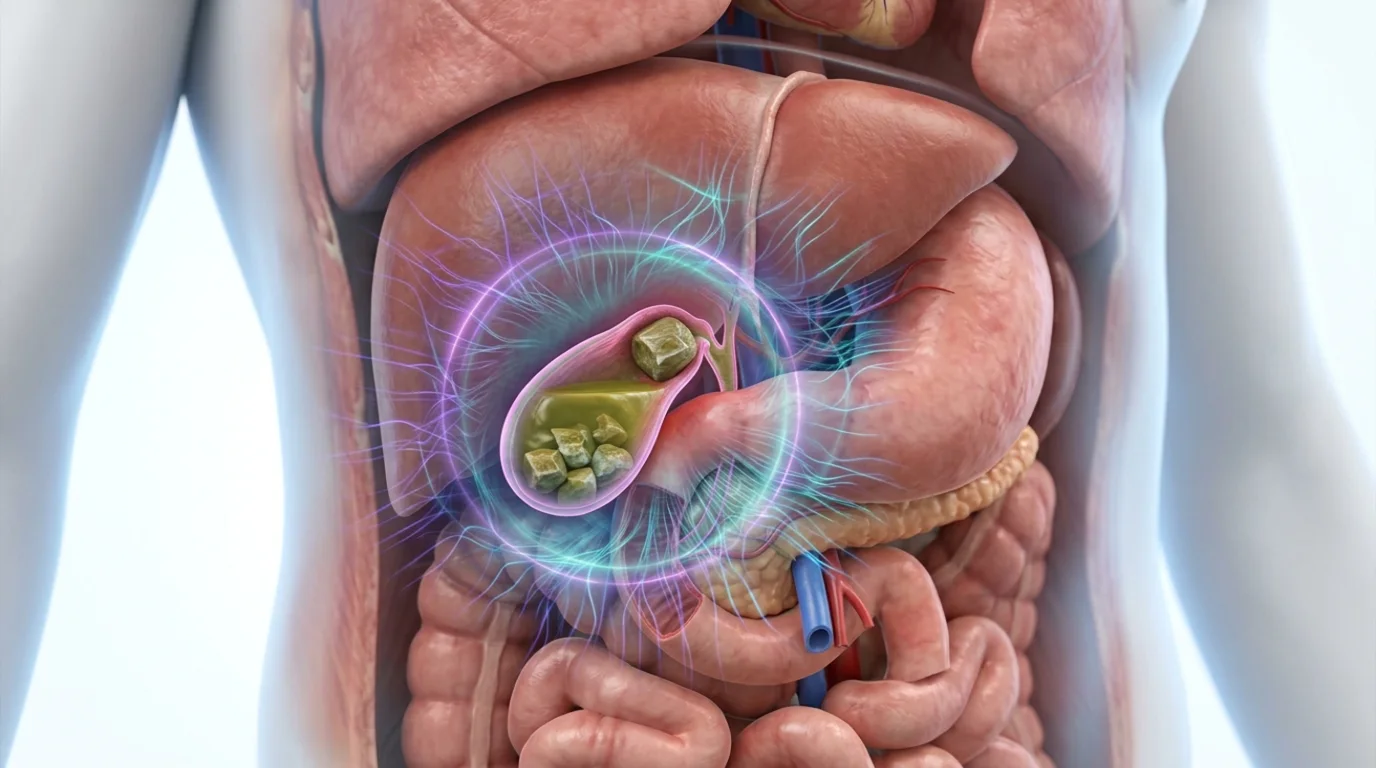
Many gallstones remain silent and never cause symptoms. Gallbladder stone pain usually begins when a stone blocks the flow of bile through one of the biliary ducts. This blockage can cause pressure and trigger a gallbladder attack, also known as biliary colic.
Heavy or fatty meals can trigger symptoms because eating causes the gallbladder to contract and release bile. If a stone is blocking the outlet, that contraction can contribute to the characteristic pain of a gallstone attack. The answer to what causes gallbladder stone pain is therefore usually not the presence of a stone alone, but a stone interfering with normal bile flow.
Symptoms of Gallbladder Stone Pain
The symptoms of gallbladder stone pain can vary from person to person, but the pain often develops in the upper-right or upper-middle abdomen. Common gallstone symptoms include:
- Sudden or intense upper abdominal pain
- Pain beneath the right ribs
- Pain that may spread to the back or right shoulder
- Nausea
- Vomiting
- Discomfort after a heavy or fatty meal
Some symptoms are more concerning than ordinary biliary colic. Fever, chills, jaundice, dark urine, pale or light-colored stools, persistent vomiting, or abdominal pain lasting several hours require prompt medical assessment. Understanding these symptoms can help distinguish ordinary gallbladder stone pain from symptoms that may indicate a complication.
Where Does Gallbladder Stone Pain Actually Show Up?
One reason gallbladder stone pain can be confusing is that it does not always remain directly over the gallbladder. The most common location is the upper-right abdomen beneath the ribs. Some people experience pain in the upper-middle abdomen instead. Gallstone pain can also radiate toward:

- The right shoulder
- The right shoulder blade
- The upper back
This referred pain can make a gallbladder problem feel like a back or shoulder problem. If you’re searching for gallstone pain location, remember that the exact location can vary. The pattern of pain, associated symptoms, physical examination, blood tests, and imaging are all important when determining the cause.
How Long Can Gallbladder Stone Pain Last?
A gallbladder attack can last several hours. NIDDK notes that gallbladder attacks often occur after heavy meals and commonly cause upper-right abdominal pain that may continue for several hours.
Some attacks eventually improve when the stone moves and the blockage is relieved. However, pain that continues for several hours, becomes severe, or is accompanied by fever, chills, jaundice, vomiting, or other concerning symptoms should be medically evaluated.
Repeated attacks are also important. Once someone has experienced a gallbladder attack, additional attacks are more likely, which is why recurring gallbladder stone pain deserves proper evaluation rather than repeated home treatment.
How Can I Relieve Gallbladder Stone Pain?
If you are experiencing gallbladder stone pain, avoid foods that clearly trigger your symptoms, particularly heavy or fatty meals. Eating can cause the gallbladder to contract, which may worsen symptoms during an active attack.
For mild symptoms, some people find temporary comfort from resting and using gentle warmth over the painful area. However, home measures should not be used to delay medical evaluation when pain is severe, persistent, or accompanied by warning signs. Do not rely on a heating pad, dietary changes, or home remedies if you have:
- Severe or worsening abdominal pain
- Fever or chills
- Yellow skin or eyes
- Persistent vomiting
- Dark urine
- Pale or clay-colored stools
These symptoms may indicate a complication requiring medical treatment. The safest approach to gallbladder stone pain relief is therefore to use temporary comfort measures only when appropriate and seek professional care when symptoms are severe or persistent.
What Food to Avoid With Gallstones?
Diet can be useful for reducing exposure to foods that trigger gallbladder stone pain, although dietary changes do not remove existing gallstones. Many people find that fatty or heavily fried meals worsen symptoms. Foods that may be worth limiting include:

- Deep-fried foods
- Very fatty meats
- Full-fat dairy products
- Heavy cream-based sauces
- Highly processed snacks
- Large, high-fat meals
You do not necessarily need to eliminate all dietary fat. Instead, focus on a balanced eating pattern and pay attention to foods that consistently trigger your symptoms. For long-term gallstone prevention, NIDDK recommends maintaining a healthy weight, avoiding rapid weight loss, eating more fiber-rich foods and healthy fats, and limiting refined carbohydrates and sugar.
What Foods Calm a Gallbladder Attack?
There is no specific food that can cure gallbladder stone pain or dissolve most gallstones. When symptoms have settled, smaller and lower-fat meals may be easier to tolerate than large, heavy meals. Depending on individual tolerance, simple foods such as:
- Plain rice
- Toast
- Crackers
- Clear soups
- Steamed vegetables
- Other low-fat foods
may be easier to digest. Staying adequately hydrated is also important for general health. However, food choices should not replace medical evaluation. If an attack is severe or keeps returning, the underlying gallstones may require medical treatment.
When Gallbladder Stone Pain Means You Need Urgent Care
Certain symptoms should never be ignored, regardless of whether you think the problem is simply gallbladder stone pain. Seek prompt medical care if you have:
- Severe or persistent abdominal pain
- Pain lasting several hours
- Fever or chills
- Yellowing of the skin or eyes
- Persistent nausea or vomiting
- Dark or tea-colored urine
- Pale or light-colored stools
These symptoms can occur when gallstones cause complications involving the gallbladder, bile ducts, liver, or pancreas. Do not wait for the pain to become unbearable before seeking care.
Diagnosis of Gallbladder Stone Pain
Diagnosing gallbladder stone pain involves more than simply identifying gallstones on an ultrasound. A doctor may consider:
- Your symptoms and pain pattern
- Physical examination
- Abdominal ultrasound
- Blood tests
- Liver function tests when appropriate
- Signs of gallbladder inflammation
- Possible bile duct obstruction
- Evidence of pancreatitis
Ultrasound is commonly used to detect gallstones, while blood tests and additional imaging may help identify complications or problems involving the bile ducts, liver, gallbladder, or pancreas. A detailed evaluation helps determine whether the pain is caused by gallstones or another condition with similar symptoms.
Treatment Approach at Meyash Hospital
At Meyash Hospital, Hisar, patients with gallbladder stone pain can be evaluated according to their symptoms, ultrasound findings, medical history, and overall health. Dr. Yashpal Singla and the surgical team can assess whether observation, additional testing, medication, or laparoscopic treatment may be appropriate.
Treatment should not be based on pain intensity alone. The underlying cause, recurrence of attacks, complications, and overall surgical risk all matter.
For patients with symptomatic gallstones or certain complications, laparoscopic cholecystectomy is a standard definitive treatment. SAGES identifies symptomatic gallstones and acute cholecystitis among the indications for laparoscopic gallbladder surgery, while asymptomatic gallstones generally are not an indication for routine cholecystectomy.
Gallstone Treatment Options
Treatment depends on whether gallstones are causing symptoms or complications.
Observation
Silent gallstones generally do not require treatment simply because they are present. However, treatment decisions should be individualized when there are unusual risk factors or complications.
Medication
Selected patients with certain cholesterol gallstones may receive oral dissolution therapy such as ursodiol when surgery is unsuitable. These medicines do not work for every type of gallstone, can require prolonged treatment, and stones may recur.
ERCP
Endoscopic retrograde cholangiopancreatography (ERCP) may be used when a gallstone becomes lodged in the common bile duct. ERCP is different from gallbladder removal because it primarily addresses stones within the bile ducts.
Laparoscopic Cholecystectomy
Laparoscopic cholecystectomy removes the gallbladder through small surgical incisions. It is commonly used for symptomatic gallstones and appropriate gallstone complications. SAGES describes laparoscopic cholecystectomy as the standard surgical approach for patients requiring gallbladder removal.
For recurrent gallbladder stone pain, definitive treatment may therefore be considered rather than repeatedly treating individual attacks.
Is Surgery Always Needed for Gallbladder Stone Pain?
No.
Not every person with gallstones needs surgery. People with silent gallstones generally do not require routine cholecystectomy. However, surgery may be recommended when gallstones cause:
- Recurrent symptomatic attacks
- Acute cholecystitis
- Gallstone pancreatitis
- Certain bile duct complications
- Other clinically significant gallstone problems
The decision should be made after considering symptoms, examination findings, imaging, medical history, and surgical risk.
This is why gallbladder stone pain should be evaluated as part of the complete clinical picture rather than treated only according to how painful one individual attack feels.
Recovery After Laparoscopic Gallbladder Surgery
Recovery after laparoscopic cholecystectomy varies between patients.
Many uncomplicated laparoscopic procedures are performed as outpatient surgery or involve only a short hospital stay. NIDDK notes that patients may often return to normal physical activity in about a week, although recovery instructions vary by patient and procedure. Your surgeon may provide instructions regarding:
- Diet
- Wound care
- Driving
- Exercise
- Heavy lifting
- Work
- Follow-up appointments
Follow your surgeon’s individual instructions rather than assuming that every patient has exactly the same recovery timeline.
Preventing Future Episodes
Not every episode of gallbladder stone pain can be prevented, but healthy lifestyle habits may help reduce gallstone risk.
Maintain a Healthy Weight
Being overweight can increase gallstone risk, while rapid weight loss can also increase the likelihood of developing gallstones. Gradual, sustainable weight management is preferable to crash dieting.
Eat a Balanced Diet
A balanced diet containing fiber-rich foods, healthy fats, and fewer refined carbohydrates and added sugars can support overall health and may help reduce gallstone risk.
Stay Physically Active
Regular physical activity can support healthy weight management and overall metabolic health.
Avoid Crash Diets
Very rapid weight loss and extreme calorie restriction can increase the risk of gallstones.
Conclusion
Gallbladder stone pain is a common symptom of gallstones that interfere with normal bile flow. It often affects the upper-right abdomen and may radiate toward the back or right shoulder. Attacks can occur after heavy meals and may last several hours.
The most important thing is not simply learning how to stop gallbladder stone pain temporarily. It is understanding whether the pain represents uncomplicated biliary colic or a more serious complication.
Severe or persistent pain, fever, chills, jaundice, persistent vomiting, dark urine, or pale stools require prompt medical assessment.
If attacks keep returning, speak with a qualified doctor or surgeon about appropriate gallstones treatment. For suitable patients with symptomatic gallstones, laparoscopic cholecystectomy can provide definitive treatment.
Dealing With Recurring Gallbladder Stone Pain? Let’s Talk
If gallbladder stone pain keeps coming back and interfering with your daily life, don’t keep relying on temporary home remedies. Meyash Hospital, Hisar offers evaluation and treatment for gallbladder conditions, including laparoscopic treatment when clinically appropriate. Dr. Yashpal Singla and the surgical team can review your symptoms and imaging findings and help determine the most appropriate treatment approach.
Book a consultation to discuss your gallstone symptoms and treatment options.
FAQs
How long can gallbladder stone pain last?
A typical gallbladder attack can last several hours. Pain that persists for several hours, becomes severe, or occurs with fever, chills, jaundice, or vomiting should be medically evaluated.
What foods should I avoid with gallstones?
Many people find that fatty and fried foods trigger gallbladder stone pain. A lower-fat, balanced eating pattern may reduce exposure to personal food triggers, although diet does not remove existing gallstones.
Is gallbladder stone pain always in the abdomen?
No. Gallstone pain most commonly occurs in the upper-right or upper-middle abdomen but may radiate toward the back or right shoulder.
Can gallbladder stone pain go away on its own?
Yes, a gallbladder attack can settle when a stone moves and the blockage is relieved. However, recurring attacks should be evaluated because additional attacks and complications can occur.
Is surgery always needed for gallbladder stone pain?
No. Silent gallstones generally do not require routine surgery. Symptomatic gallstones and certain complications may require laparoscopic cholecystectomy.
Can gallbladder stone pain be mistaken for something else?
Yes. Upper abdominal pain can occur with several other conditions, including reflux, ulcers, pancreatitis, and other abdominal problems. A proper medical evaluation is important when the diagnosis is uncertain.
When should I go to the hospital for gallbladder pain?
Seek prompt medical care for severe or persistent abdominal pain, fever or chills, jaundice, persistent vomiting, dark urine, or pale stools. These can indicate a gallstone complication.
This article has been reviewed by the medical team at Meyash Hospital, Hisar. It is intended for general educational purposes and does not replace personalized medical advice, diagnosis, or treatment. If you have severe abdominal pain, fever, jaundice, persistent vomiting, or other concerning symptoms, seek prompt medical attention.

