
Mesh is used in most hernia repairs today, and for good reason. It makes the repair stronger and lowers the chance the hernia comes back. But if your surgeon mentioned mesh, you might be wondering about the downsides. So what about hernia mesh complications? They’re uncommon, and most people never have a problem with their mesh at all.
When issues do happen, they usually show clear symptoms you can catch early. Here’s the honest version of the risks, the warning signs, and what helps prevent them.
What Is Hernia Mesh and Why Is It Used?
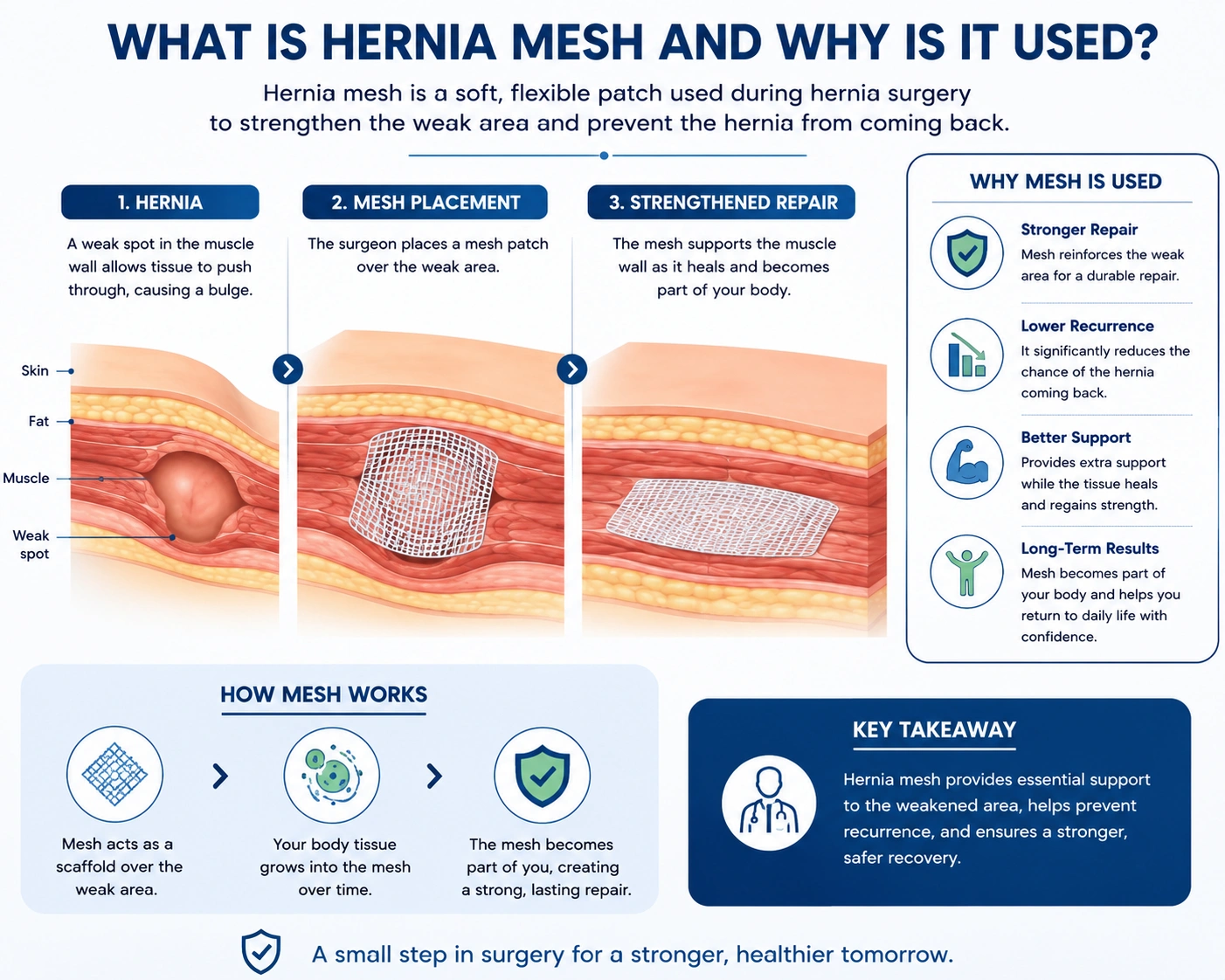
A hernia is a weak spot in your muscle wall that lets tissue push through, showing up as a bulge. During surgery, the surgeon pushes that tissue back and reinforces the area with a mesh, a soft, flexible patch that supports the muscle wall as it heals.
Why use it at all? Because mesh works. Repairs done with mesh hold up far better than stitching muscle alone, which is the older method. The mesh becomes part of your body over time as tissue grows into it, creating a strong, lasting repair. For the vast majority of people, this is exactly what happens, quietly and without trouble, with no hernia mesh complications at all.
Are Hernia Mesh Complications Common?
No, and it’s worth saying clearly so you’re not unnecessarily alarmed. Most mesh repairs heal well and cause no problems for the rest of a person’s life. Mesh has been used safely in millions of operations.
That said, no medical device is perfect, and a small number of people do experience issues. Being aware of hernia mesh complications isn’t about fear, it’s about knowing what to look for so anything that does come up gets caught early. The earlier a problem is spotted, the simpler it usually is to handle.
Common Hernia Mesh Complications
Here are the issues that can sometimes occur.

1. Pain or Discomfort
Some soreness right after surgery is normal. But ongoing or new pain at the mesh site, weeks or months later, can occasionally happen and is worth reporting. Most cases are manageable.
2. Infection
Now and then, the area around the mesh can become infected. Signs include redness, warmth, swelling, fever, or fluid leaking from the wound. Infections caught early are usually treated with medicine, though deeper ones occasionally need more attention.
3. Mesh Migration or Shrinkage
In rare cases, the mesh can shift slightly from where it was placed, or contract over time. This can cause discomfort or, uncommonly, affect the repair. It’s one reason follow-up visits matter.
4. Adhesions
Sometimes scar-like tissue, called adhesions, forms and sticks the mesh to nearby tissue or organs. Often this causes no symptoms, but occasionally it can lead to discomfort or other issues.
5. Hernia Recurrence
Even with mesh, a hernia can occasionally come back, showing up as a returning bulge. It’s uncommon, but it’s part of why following recovery advice matters so much.
6. Bowel Problems
Very rarely, mesh-related adhesions or migration can affect the bowel, causing pain, bloating, or trouble passing stool. This needs prompt medical attention.
Are All Meshes the Same?
Not quite, and this is worth understanding when thinking about hernia mesh complications. Most meshes are made from synthetic material that’s safe, durable, and becomes part of your body as tissue grows into it. Some are biological, which the body gradually absorbs, and these are used in specific situations like a contaminated or high-infection-risk repair.
Your surgeon chooses the mesh based on your hernia, its size and location, and your overall health. There isn’t a single “best” mesh for everyone. What matters most is that an experienced surgeon selects and places it correctly, because good technique does more to prevent problems than the mesh brand itself.
Modern meshes are well tested and designed specifically to lower the chance of issues.
Symptoms You Should Never Ignore
Most healing discomfort is normal, but some symptoms point to a possible mesh problem and deserve a prompt call to your doctor. Watch for:
- Ongoing or worsening pain at the surgery site
- Redness, warmth, swelling, or fluid leaking from the wound
- A fever or chills
- A bulge returning at or near the repair
- Persistent bloating, nausea, or trouble passing stool
If you notice severe pain, vomiting, or signs of a blockage, treat it as urgent. Catching any of these early is far easier than dealing with a problem that’s been left to grow. Early recognition of potential hernia mesh complications often leads to simpler treatment.
How Mesh Problems Are Diagnosed
If a mesh complication is suspected, diagnosis usually starts with a physical exam, where the doctor checks the area and asks about your symptoms. Because the mesh sits beneath the surface, they’ll often order imaging, an ultrasound, CT scan, or MRI, to see what’s happening around the mesh and rule out issues like migration, adhesions, or a recurrence.
This helps the surgeon decide whether simple treatment is enough or whether anything more is needed when evaluating possible hernia mesh complications.
Can Mesh Complications Be Treated?
Yes. Most mesh-related issues can be managed, and the treatment depends on the problem. A minor infection is often handled with medicine, and pain can frequently be managed with the right approach.
In the uncommon cases where mesh has migrated, caused significant problems, or led to a recurrence, a surgeon can address it, sometimes adjusting or revising the repair. Many people worry that any mesh issue means major surgery, but that’s often not the case. Plenty of problems are resolved with simpler measures, especially when caught early, which is why prompt attention to hernia mesh complications is so important.
How to Lower Your Risk of Mesh Complications

A lot of what keeps mesh problems away comes down to good care and a few sensible habits:
- Choose an experienced surgeon and a well-equipped hospital, since skill and proper technique matter most
- Keep your wound clean and dry to lower the chance of infection
- Take any prescribed antibiotics fully and follow your medicine instructions
- Walk gently from day one and avoid heavy lifting until you’re cleared
- Eat well and stay hydrated to support healing
- If you smoke, stopping improves healing and lowers infection risk
- Go to every follow-up visit, even when you feel fine, so anything can be caught early
Most hernia mesh complications that do happen are easier to prevent or catch early than to treat once they’ve progressed.
What Are the Long-Term Effects of Mesh?
For most people, the long-term effect of mesh is simply a strong, stable repair that lasts the rest of their life. The mesh becomes part of your body as tissue grows into it, quietly holding the muscle wall together with no ongoing symptoms.
In a small number of cases, long-term issues can show up, such as occasional discomfort at the site, the mesh shrinking or shifting slightly over the years, or scar tissue forming. Rarely, this leads to a recurrence or bowel-related problems. The reassuring point is that serious long-term effects linked to hernia mesh complications are the exception.
Modern meshes are designed to settle safely, and regular follow-up means anything unusual gets spotted early.
What Are the Symptoms of Hernia Mesh Problems Years Later?
A mesh problem that appears years after surgery tends to announce itself in recognisable ways. The most common is new or returning pain around the old repair site. You might also notice a bulge or lump returning, which can signal the hernia has come back.
Other late symptoms include swelling or tenderness, signs of infection even long after surgery, or digestive issues like bloating, nausea, or trouble passing stool if the mesh has affected nearby tissue. Don’t brush these off just because the surgery was a long time ago.
If something new develops around an old repair, get it checked, since late hernia mesh complications are usually very treatable when caught early.
Conclusion
Hernia mesh complications are uncommon, and most people live the rest of their lives with their mesh and never give it a second thought.
Mesh exists because it makes repairs stronger and less likely to fail, and for the vast majority it does exactly that. When problems do arise, they usually announce themselves with clear symptoms, ongoing pain, signs of infection, a returning bulge, or bowel trouble, and most can be treated, especially when caught early.
The smartest things you can do are choose a skilled surgeon, look after your wound, follow your recovery advice, and keep your follow-up appointments. Do that, and the odds are firmly on your side.
At Meyash Hospital, our experienced surgeons use quality mesh and advanced techniques to give you a strong, lasting repair with the lowest possible risk. We provide clear guidance before surgery and careful follow-up afterward to catch any issue early. From start to finish, our patient-first team is there so you can heal with confidence.
This article is reviewed by the expert team at Meyash Hospital. If you are experiencing symptoms, consult the specialist Dr. Yashpal Singla for expert diagnosis and advanced treatment.
Frequently Asked Questions (FAQs)
1. How common are hernia mesh complications?
They’re uncommon. Most mesh repairs heal well and cause no problems. When issues do occur, they usually show clear symptoms and can be treated.
2. Can your body reject surgical mesh?
True rejection is very rare. Modern meshes are designed to be accepted by the body as tissue grows into them. Occasionally someone reacts to the mesh, but outright rejection is uncommon.
3. What are the warning signs of a mesh problem?
Ongoing pain at the site, signs of infection like redness or fever, a returning bulge, or persistent bloating and trouble passing stool. See your doctor if these appear.
4. Can hernia mesh be removed if there’s a problem?
In some cases, yes. A surgeon can adjust, revise, or remove mesh if it’s causing significant issues, though many problems are managed without that.
5. Does mesh always cause complications eventually?
No. The vast majority of people have mesh repairs that last a lifetime with no problems at all. Complications are the exception, not the rule.
6. How can I lower my risk of mesh complications?
Choose an experienced surgeon, keep your wound clean, follow your medicine and recovery instructions, avoid early heavy lifting, and attend your follow-ups.

